At a glance
In cold weather, we're all at risk of catching a cold sooner or later. Can it be avoided? How can you protect yourself?
In Belgium or abroad, in cold weather, we're all at risk of catching a cold sooner or later.
This can come along with other types of chills or infections, such as a throat or respiratory tract infection.
Can it be avoided? How can you best protect yourself?
What really causes a cold: not really the cold, but viruses!
Experts agree that it's not the cold itself but rather an infection caused by viruses that's behind the common cold.
Various viruses that attack the respiratory system can be responsible, the main ones being rhinovirus and coronavirus.
These viruses enter the body through the nose or eyes, from where they migrate to the mucous membranes of the nose. They settle there and multiply on a large scale. From there, they spread via nasal secretions (including sneezes) to new victims.
The effect of cold weather: when it's cold, the air breathed in through the nose irritates and affects the mucous membranes, making them less effective at blocking germs and more vulnerable to respiratory viruses.
Incubation
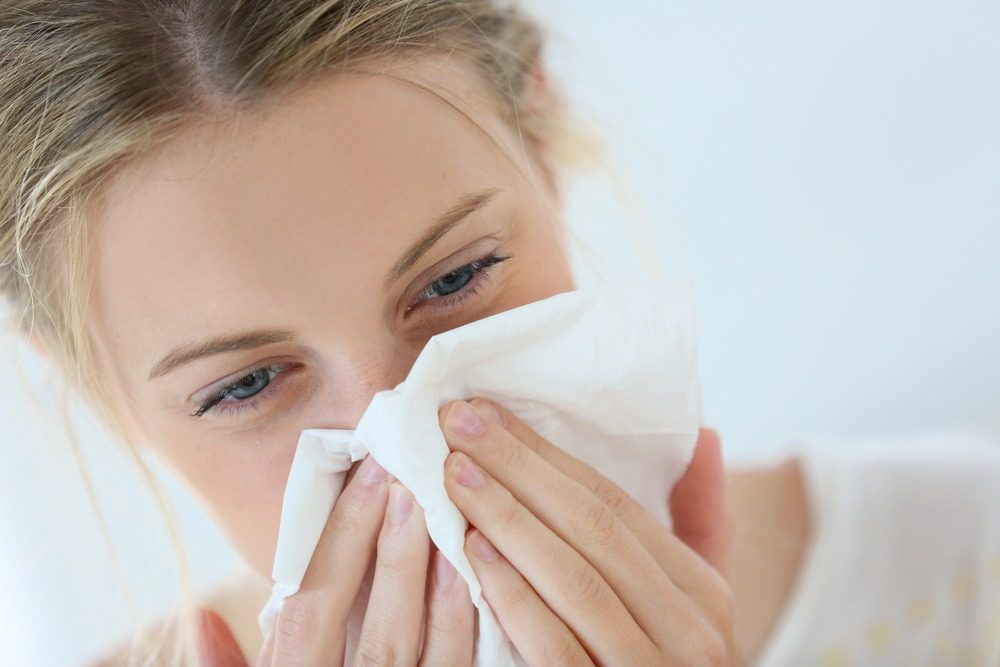
A cold can develop between 12 hours and 3 days after infection. The infection causes the nasal mucous membranes to swell: the nose becomes congested and nasal secretions increase. This results in a "blocked" and/or "runny" nose.
A cold can cause severe tiredness, a feeling of being run down, aches, and sometimes a fever.
In most cases, your body will need several days to successfully fight off the cold.
However, if the illness gets to the point where you need to stay in bed, or it causes you a fever or pain, we recommend seeing your doctor.
It could then be the flu.
Contagion
The virus passes from one person to another via the secretions of the infected person:
- via hands contaminated through contact with the nose, eyes or a tissue;
- via an object touched by the infected person (door, door handle, tap, keyboard, computer mouse, handrail, any other object touched, etc.). Contaminated objects can remain so for several hours!;
- via inhalation of airborne particles after a sneeze.
How can you avoid getting infected?
- Avoid contact with or getting close to people with a cold (keep a "safety distance" of at least 1 metre).
- If possible, avoid places where a large number of (potentially infected) people are gathered in a small space.
- Wearing a mask covering the mouth and nose can protect you or protect other people. In some countries, such as Japan, wearing a mask in such cases is seen as a civic duty.
- Wash your hands very often and thoroughly. See the article on this topic: "20 seconds to wash your hands properly".
- Avoid touching objects that have been touched by infected people. Disinfect or clean potentially contaminated objects.
Even so, if you've "caught the virus", it's not certain you'll develop a cold. Your immune system may already have produced the antibodies needed to stop the infection.
This is often why members of the same family end up becoming immune thanks to the contact they have with one another!