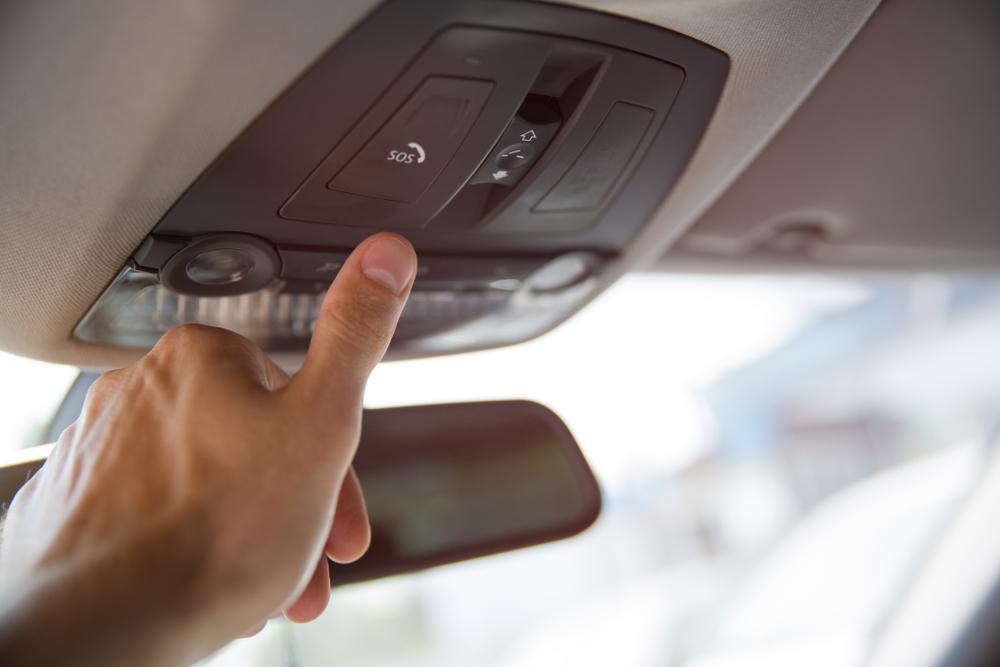
At a glance
What is the "eCall" system? How does it work? Should it be installed in every vehicle?
What is the "eCall" system?
How does it work?
Should it be installed in every vehicle?
At the initiative of the European Commission, car manufacturers are required to fit all new motor vehicles placed on the market since 31 March 2018 with an automatic alarm system called "eCall".
What is the purpose of eCall?
The system makes it possible to immediately call a call centre (emergency centre) in the event of an emergency. The call is sent automatically via an electronic unit installed in the vehicle. This can be triggered by the driver or, in the event of an accident, activate automatically in the event of a violent impact.
The aim, of course, is to be able to send emergency services to the scene as quickly as possible in the event of a serious accident, and to save lives by reducing the time it takes for rescue services to arrive. According to the European Commission, more than 2,500 lives could be saved this way every year in Europe.
The system also allows other drivers who witness a serious accident to send an alert to notify the emergency services.
The use of eCall is therefore not intended to report a simple car breakdown.
How does eCall work?
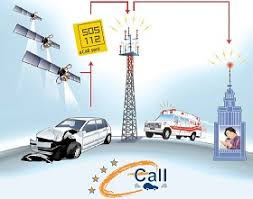 The vehicle's occupant can trigger eCall by pressing the call button built into the vehicle. The call can also be triggered automatically following a violent impact (e.g. airbag deployment).
A double connection is then established with a call centre, known as a PSAP (Public Safety Answering Point): on the one hand by voice (a phone link), which allows the driver to give information to the operator, and on the other hand via a technical transmission that gives the call centre useful information such as the vehicle's location, the type of car and, where applicable, physical parameters such as airbag deployment.
Based on these two simultaneous connections, the operator will decide whether it is necessary to immediately forward the call to a 112 emergency centre (police, ambulance, fire brigade) or whether the problem does not require urgent intervention. It should be noted that many users unfortunately trigger this system for purposes it was not designed for, such as a simple information request or an unfounded call (false alarm). Quick filtering by the call centre is therefore essential.
Thanks to these two connections, the call centre is always alerted to the incident, even if the driver has lost consciousness.
Note: the purpose of the eCall system is therefore not to track vehicles. Geolocation is only activated when a call is received.
Each European Union member state has been given the right by the Commission to organise the organisational and technical conditions of these calls. The PSAP is generally managed by private organisations which, in addition to their direct connection with 112, can forward the call, where relevant, to the driver's assistance company.
Advantages and disadvantages
The advantages of eCall have been mentioned above: an immediate alert with the vehicle's location, allowing the fastest possible response from emergency services. This system is all the more valuable when the vehicle involved in the accident is in a remote area.
The disadvantages are non-urgent or unjustified use of the system: operating errors, nuisance calls from people wanting to "test" or "play" with the system (e.g. children in the vehicle), malicious acts, calls for a technical breakdown, non-urgent automatic calls. Filtering therefore prevents every call from being automatically sent to emergency services, which would otherwise be overwhelmed with "false alarms".
Only on new vehicles from 31/03/2018
The eCall system is an integral part of the equipment of any motor vehicle placed on the European market since 31/03/2018, and is not mandatory on older vehicles.
The entire vehicle fleet will therefore only be fully equipped with it after many years.
Useful links (in English):
https://ec.europa.eu/transport/themes/its/road/action_plan/ecall_en
http://www.eena.org/download.asp?item_id=111
Also read: Fast in the event of a breakdown on a motorway in Flanders