At a glance
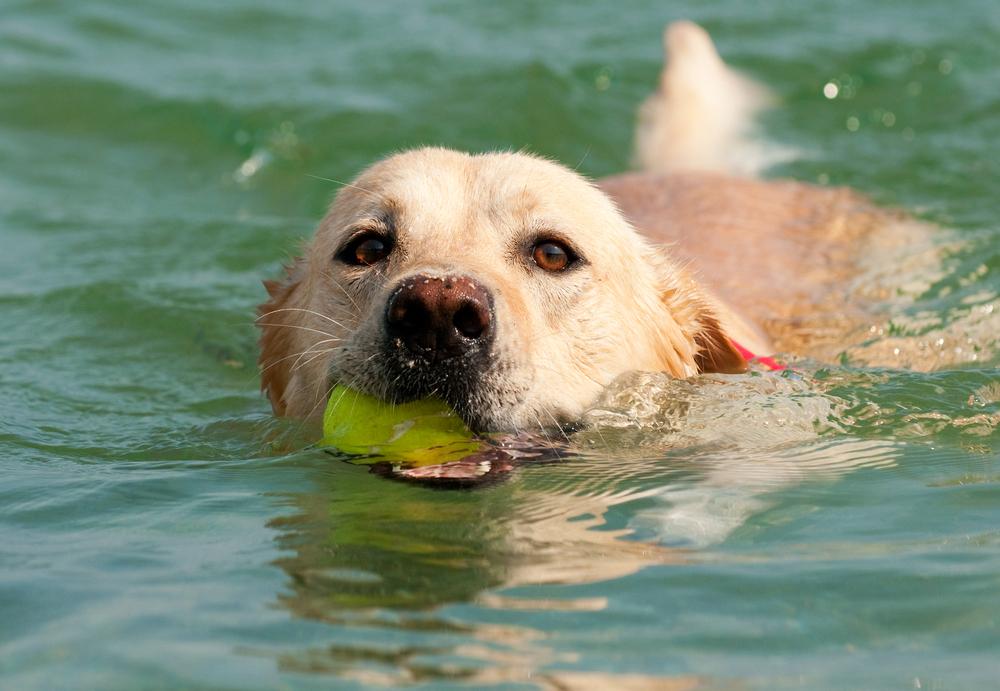
Does your dog love swimming? Thinking of encouraging your dog to swim in the sea or in a lake? What are the risks?
Summer and warm weather often go hand in hand with refreshing swims.
But be careful, because just like for humans, this isn't without risk for animals.
Does your dog love swimming?
Or would you like to take your dog swimming in the sea or in a lake?
What are the risks for your pet?
"Swimmer" dogs and the others...
Not all dogs are keen on swimming. Some breeds (and temperaments) of dogs love water more than others. Think in particular of certain hunting dog breeds that dive into the water to retrieve waterfowl, or certain rescue dogs.
Before encouraging your dog to swim, it's best to make sure they're able to swim and, above all, never force them.
If in doubt, don't take the risk, or help your dog by fitting them with a life jacket designed for this purpose.
Swimming spots and their dangers
At sea
Letting your dog venture into the sea carries certain risks, such as:
- swallowing sea water, which can make the dog ill (vomiting, diarrhoea),
- exhaustion if the dog ventures too far out to sea,
- currents that could carry the animal further offshore,
- the dog losing sight of its owner and its bearings, which could cause it to panic, and
- the owner being unable to rescue their dog if something goes wrong.
It's therefore not uncommon for such an adventure to end badly for the dog (and the owner).
Also watch out for jellyfish stings if these are present along the coast.
It's therefore best to be careful and only let your dog venture into the area close to the beach, always under supervision.
Also watch out for beaches where dogs aren't allowed. Read our article "At the beach with your dog" on the topic.
In a lake, pond, river, canal...
Here too, you need to be careful. Make sure the water is clean (especially if it's stagnant), make sure the animal doesn't get exhausted, and that there are spots where it can easily climb back onto the bank.
Also make sure your dog doesn't pose a danger to wildlife (ducks, waterfowl).
Respect areas where swimming is forbidden and avoid spots with river traffic (boats, rowing boats, kayaks, weirs, etc.) as well as fishing areas and rapids.
If the body of water is frozen, there's a risk of the ice breaking. A dog that falls into the water can quickly become hypothermic and therefore risk drowning.
Read our article "Snow holidays with your dog" on the topic.
In a swimming pool
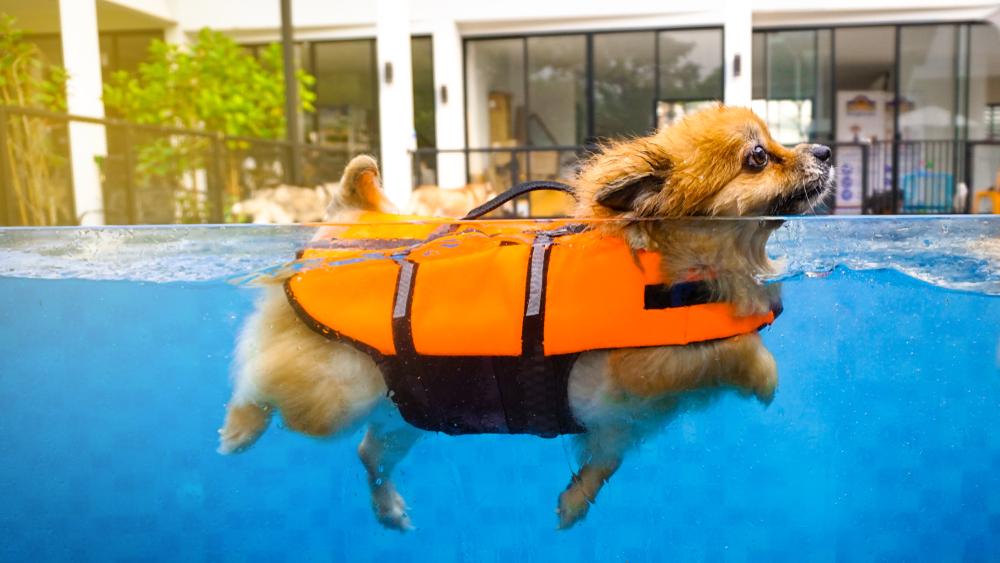 Swimming pools are where most accidents happen. The dog sees its owners having fun in the water. What could be more tempting than joining them?
There's a serious risk of exhaustion for the animal if it's forced to stay in the water without being able to get out. It risks swallowing water and drowning.
Always make sure there's a spot not too far away where the dog can get out of the pool on its own, and (just like with children) never let it swim without an adult supervising.
Teach your dog how to get out of the pool and consider fitting it with a properly sized life jacket.
Also be wary of certain pool protection systems (covers, tarps, etc.) that give a false sense of safety and can give way as soon as weight is put on them.
The main risks of swimming
Hydrocution (immersion shock)
In hot weather, a dog can suffer hydrocution (immersion shock), just like a human. It's therefore best to wet the dog before it goes swimming, even if the temperature difference isn't very large. Keep an eye on it during the swim and for a while after it comes out of the water.
Exhaustion and drowning
As seen above, dogs don't know their limits. If they can't get out of the water when they need to, they can very quickly become exhausted and panic. As with any other swimmer, this can be fatal. The basic advice is therefore not to overestimate your pet's physical abilities.
Infections
An infection from swallowing water, from licking its fur or from a skin infection (for example due to a wound) shouldn't be taken lightly. The water a dog swims in isn't always very clean. It can carry germs, bacteria or pollution, which can lead to stomach problems (diarrhoea) or infections. It's therefore essential to prevent the dog from drinking this water.
Also prevent it from licking itself after the swim; instead, dry it straight away with a towel and wash it with clean water.
One last tip: in case your dog wanders off while swimming, make sure its dog ID and microchip are up to date. This way, you can be notified when it's found.