At a glance
This guide brings together all the essential information you need to travel to Poland with confidence:
- emergency numbers
- travel documents
- health
- safety
- driving regulations
- seasonal activities
- culinary specialties
- a few useful Polish phrases for travelers
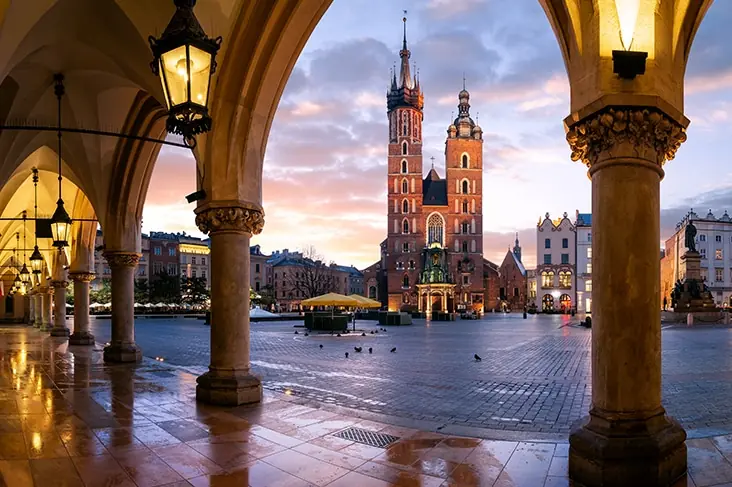
Poland is a vast country in Central Europe, bordered to the north by the Baltic Sea and sharing borders with Germany, the Czech Republic, Slovakia, Ukraine, Belarus, Lithuania, and Russia. Warsaw, Kraków, Gdańsk, and Wrocław attract numerous visitors every year thanks to their exceptional historical heritage, remarkable architecture, and vibrant cultural scene.
For Belgian travelers, Poland is an accessible destination, whether by plane from Brussels or Charleroi, by train, or by car. Visitors can enjoy lively cultural cities, UNESCO World Heritage sites, mountain ranges ideal for hiking or winter sports, and seaside resorts along the Baltic coast. Whether you are planning a city break, a nature getaway, or a family holiday, preparation remains the key to a successful trip.
Emergency numbers: who should you call in case of a major problem?
Emergency numbers
In Poland, the European emergency number 112 is available throughout the country. Other dedicated numbers connect directly to specific emergency services:
- 112: European emergency number (access to emergency services)
- 999: ambulance / emergency medical services
- 998: fire brigade
- 997: Polish police
- Belgian Embassy in Warsaw: +48 22 551 28 00 (for any consular emergency)
- Card Stop (lost or stolen credit cards): +32 78 170 170
- Doc Stop (lost or stolen Belgian identity card or passport): +32 2 488 21 23
Assistance: Redion (Belgium)
In an emergency, always contact the local emergency services first!
- Need to contact Redion for a medical or technical problem (e.g. car breakdown)? Use the Redion Belgium app (Apple Store or Google Play).
- Need to contact Redion for an administrative request or a contract amendment? Use the customer area on the website: https://www.redion.be
How can you travel safely in Poland?
Poland has a temperate continental climate, with cold winters that can be severe in the east and in mountain regions, and generally warm summers. Climate differences between the northern coast, the central plains, and the Tatra Mountains in the south can be significant depending on the season. It is therefore recommended to adapt your clothing to the conditions and check weather forecasts before departure.
Good preparation also includes checking your travel documents, insurance coverage, and registering your trip via Travellers Online to facilitate consular assistance.
What travel documents are required to visit Poland?
For Belgian citizens, Poland is a member of the European Union and the Schengen Area. You only need a valid Belgian identity card or passport to enter Poland. No visa is required.
The Belgian Ministry of Foreign Affairs recommends keeping a digital copy of your documents on your mobile phone. In the event of loss or theft, this can help facilitate your return to Belgium.
Before departure, register your trip on the Travelers Online website of the Belgian Ministry of Foreign Affairs which can then provide information and support in case of a major issue.
What is healthcare like in Poland?
Poland has both public and private healthcare systems. The European Health Insurance Card EHIC is valid in Poland at healthcare facilities affiliated with the National Health Fund (NFZ). It allows coverage of medically necessary healthcare under the same conditions as for Polish residents. However, it is recommended that you request it from your health insurance fund at least two weeks before departure.
Waiting times in the public sector may be long. Some travelers choose private clinics, where treatment costs are borne by the patient.
If you require medical assistance abroad, Redion can arrange your treatment or repatriation 24/7.
Redion recommends taking out travel insurance covering medical expenses and repatriation. Note that annual policies generally offer higher reimbursement limits than temporary policies.
How safe is Poland?
Poland is generally considered a safe destination. The risk of terrorist attacks is currently low. In major cities and tourist areas, normal caution is advised regarding pickpocketing, particularly on public transport, in train stations, and in crowded places.
Since July 2024, a buffer zone has been established along the border with Belarus for security reasons related to illegal border crossings. This zone includes parts of the Białowieża Forest and may restrict access to certain tourist sites. Travelers are advised to exercise extra caution in this border region or avoid it altogether.
It is also recommended to avoid political demonstrations, even when they appear peaceful.
The situation may also be affected by developments related to the war in Ukraine. For updated security advice, consult the website of the Belgian Ministry of Foreign Affairs.
Tip: Before you travel, consult the travel advice issued by the Belgian Federal Public Service Foreign Affairs at https://diplomatie.belgium.be/ and register your stay at https://travellersonline.diplomatie.be/.
What are the driving rules in Poland?
Which driving licence and assistance coverage apply in Poland?
A valid Belgian driving licence is recognized in Poland, as Poland is a member of the European Union.
Check that your car insurance policy covers travel in Poland, particularly for roadside assistance and vehicle repatriation. In addition to your car insurance, travel insurance including roadside assistance can be useful in the event of a breakdown or accident.
What are the speed limits in Poland?
The speed limits for passenger vehicles are:
- In urban areas: 50 km/h
- Outside urban areas (standard roads): 90 km/h
- Dual carriageways: 100 km/h
- Expressways: 120 km/h
- Motorways: 140 km/h
Speed cameras are widely used throughout the road network. Substantial fines may be imposed on the spot for speeding offences.
Practical driving tips in Poland
The use of headlights is mandatory both day and night.
A warning triangle must be carried in the vehicle.
The legal blood alcohol limit is 0.2 g/L, which is very strict. It is strongly recommended not to consume any alcohol before driving.
Poland’s road network has improved significantly in recent years. Some rural roads, however, remain in poorer condition. Winter driving conditions can be difficult (snow and ice), especially in the east and in mountain regions. Winter tyres are strongly recommended between November and March.
Most motorways are subject to tolls for vehicles over 3.5 tonnes. Since July 2023, state-managed motorway sections have been free for passenger cars. Some privately operated sections remain subject to tolls. Check current conditions before departure.
What can you visit in Poland depending on the season?
What to do in spring in Poland (March to May)?
Spring is a pleasant season to discover Poland, with gradually rising temperatures and cities that are still relatively uncrowded. Warsaw, Kraków, Wrocław, and Gdańsk are enjoyable to explore on foot among blooming parks, local markets, and historic landmarks.
It is also a good time to discover the Polish countryside and the northern lake districts before the summer rush. Bring clothing suitable for temperature variations, which can still be significant early in the season.
What to do in summer in Poland (June to August)?
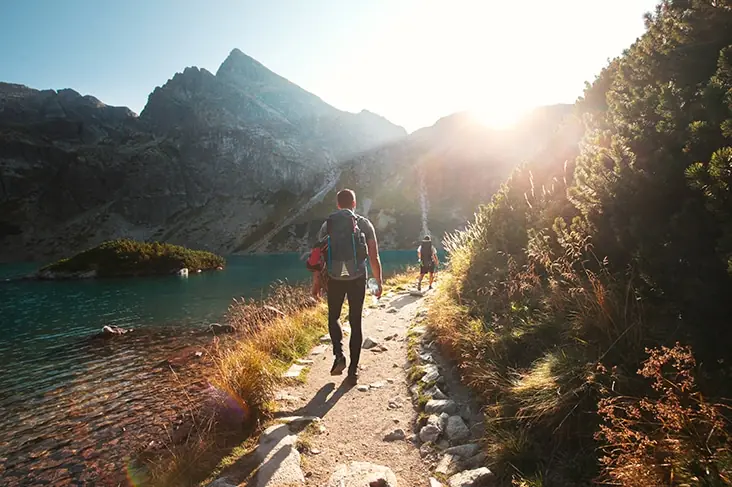
Summer is the peak tourist season in Poland. Temperatures are generally pleasant, with long days ideal for sightseeing. The Baltic coast attracts many visitors with its seaside resorts and sandy beaches.
In the south, the Tatra Mountains offer beautiful hiking opportunities and spectacular mountain landscapes. Major cities host numerous cultural festivals in July and August. It is advisable to book accommodation and transport in advance during this period.
What to do in autumn in Poland (September to November)?
Autumn is a mild and colourful season, ideal for cultural trips. Cities are less crowded than in summer, temperatures remain pleasant in September and October, and prices are often more attractive.
It is an excellent time to explore Kraków’s historical heritage, visit the Jewish district of Kazimierz, or discover the Wieliczka Salt Mine (and its underground St. Kinga’s Chapel with its impressive salt sculptures)
In November, the cold gradually sets in: make sure to bring suitable clothing and equipment.
What to do in winter in Poland (December to February)?
Winter can be severe, with temperatures occasionally dropping below -20°C in the eastern part of the country. However, this is also the season for Christmas markets, particularly renowned in Kraków, Wrocław, and Warsaw, as well as winter sports in Zakopane in the Tatra Mountains.
If traveling by car, check road conditions and equip your vehicle with winter tyres. Short daylight hours make it advisable to plan visits during the morning and early afternoon.
Tip: The climate varies significantly between the northern coast, the central plains, and the southern mountain regions. Check local weather forecasts before departure.
Did you know?
Poland is one of the European countries with the highest number of UNESCO World Heritage Sites. Among the most famous are the historic centre of Kraków, the Wieliczka Salt Mine, which has been in operation since the 13th century, and Warsaw’s Old Town, entirely rebuilt after the destruction of World War II.
A remarkable testimony to cultural and human resilience.
Other practical information about Poland
- Capital: Warsaw (Warszawa)
- Official language: Polish (English is widely understood in major cities and tourist destinations)
- Currency: zloty (PLN); Poland has not adopted the euro, so currency exchange or cash withdrawals on site may be necessary
- Area: approximately 312,000 km²
- Population: approximately 38 million inhabitants
- Time zone: UTC+1 in winter, UTC+2 in summer (same time zone as Belgium)
- Tourism office: https://www.polska.travel
- Belgian Ambassy in Warsaw: Ulica Senatorska 34, +48 22 551 28 00
What are the culinary specialties of Poland?
Polish cuisine is hearty and comforting, blending Slavic, Germanic, and Central European influences. It makes extensive use of meats, root vegetables, mushrooms, and fermented products.
Here are some must-try specialties during your stay.
Must-try dishes
: Poland is one of the world’s leading vodka-producing countries. Many flavoured varieties are available.
- Piwo (beer): widely consumed, with a broad range of local and craft breweries throughout the country.
- Kompot: a traditional non-alcoholic drink made from cooked fruits, often served with family meals.
Avoid alcoholic beverages if you are driving!
A few useful words and expressions
Polish people always appreciate visitors who make the effort to say a few words in their language. Here are some useful expressions for everyday interactions:
- Dzień dobry: Good morning / Hello
- Do widzenia: Goodbye
- Proszę: Please / You're welcome
- Dziękuję: Thank you
- Tak: Yes
- Nie: No
- Przepraszam: Excuse me / Sorry
- Ile to kosztuje