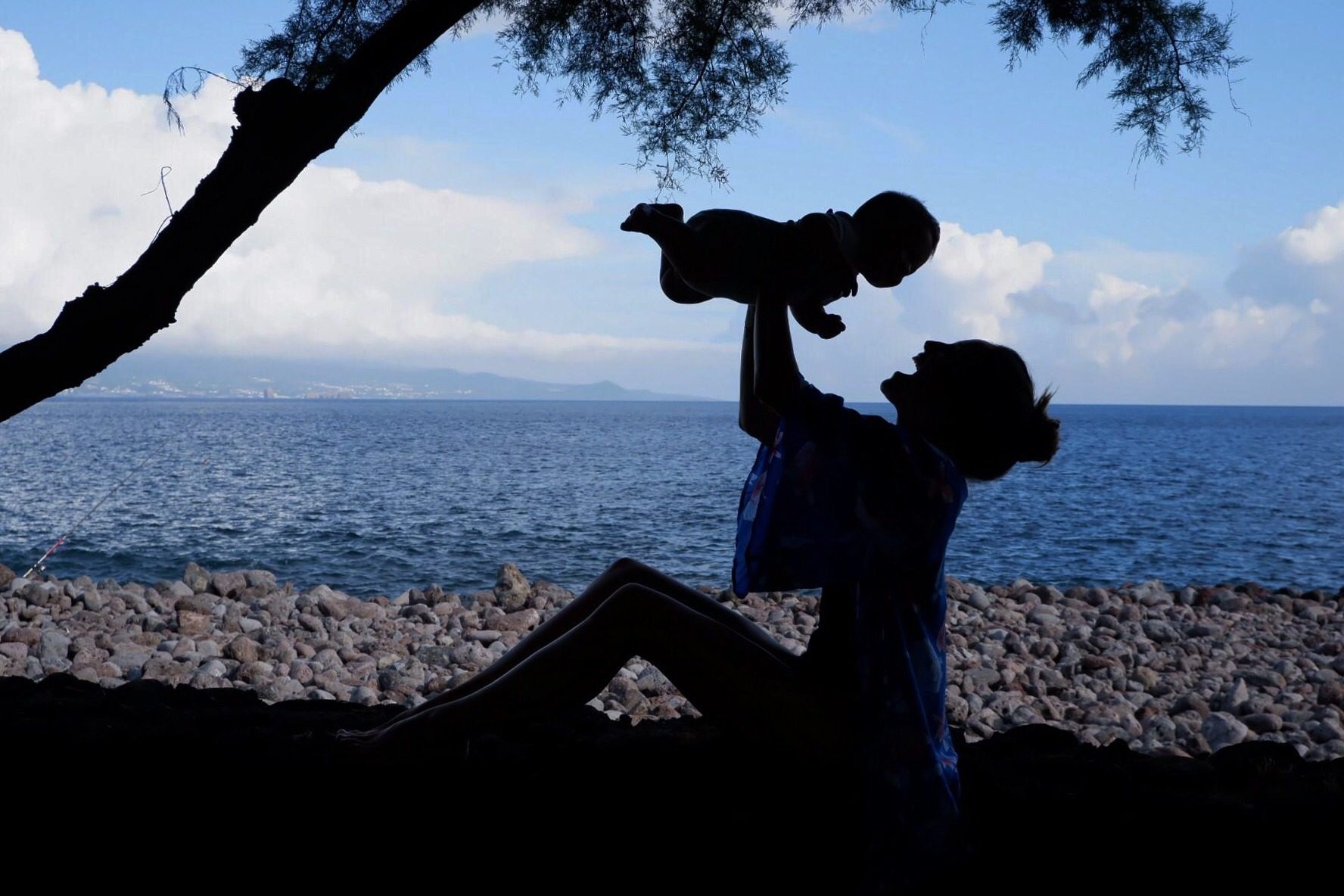
At a glance
- Favor accessible, peaceful destinations;
- Adjust the pace to your children's needs;
- Plan ahead for your arrival (meals, shops, fatigue);
- Prepare a complete packing checklist;
- Organize varied activities and stopovers along the way.
While traveling with children can be memorable and truly wonderful, a simple lack of planning can quickly become a source of stress and negatively affect your trip.
Fortunately, we're sharing all our tips for a stress-free trip you won't forget anytime soon. The keys to keep in mind? Solid organization, a pace suited to your children, and planning for the unexpected. Whether it's a weekend or a long stay, every detail counts to keep your vacation from turning into an obstacle course.
So discover our complete guide, and travel with peace of mind!
The Ideal Destinations for a Family Trip
When traveling with children, you need to make sure the destination isn't too demanding for them. This includes the distance, how you'll get there, the temperature on site, and the amenities available. If you don't plan ahead, you risk getting stressed, facing difficulties, and, as a result, not fully enjoying your trip.
Avoid climates that are too hot, too humid, or too cold. From around 2 to 3 years old, far-flung destinations become an option, but avoid countries requiring mandatory vaccines as well as those with a risk of malaria and traveler's diarrhea. Avoid taking a baby to destinations above 1,800 meters in altitude.
Here's what's worth considering to make the best decisions:
- Time difference: Beyond 4 hours (generally), children can sometimes take several days to recover.
- Accessible medical services: A nearby doctor or pharmacy makes all the difference in case of heat exhaustion, a stomach bug, or a minor mishap.
- Climate and temperature: Extreme heat can lead to a risk of dehydration or heatstroke.
- Suitable facilities: Playgrounds, swimming pools, kids' clubs, and family-friendly restaurants make everyday life on site easier.
- A reasonable altitude: Avoid stays above 1,500 meters: young children's bodies don't cope well with reduced oxygen levels.
The Best Times to Travel with Children
For children who aren't yet in school, spring is often the best compromise. Destinations are generally more pleasant, crowds are reasonable, and prices are much more affordable than in high season.
If your children are in school, spring break is also a pleasant option if you're heading to destinations that get too hot in summer. Considering a fairly hot country? Traveling off-season is also an option.
Dos and Don'ts
The classic trap when traveling with children is wanting to do too much. If your itinerary is overloaded, you sleep somewhere different every couple of days, and you cram in visit after visit without any downtime, that's risky. Your children will likely end up exhausted... and so will you!
Limit frequent changes of accommodation: staying two to three nights in the same place is much more restful for young children. Plan some quiet time every day (nap, free play, reading) so everyone can recharge. And in hot countries, schedule activities in the morning or late afternoon, keeping the middle of the day for rest.
What Should You Plan Before Leaving with Young Children?
Essential Paperwork
Before packing your bags, a few checks are in order.
Start with identity documents: within the European Union and the Schengen Area, a Kids-ID (for children under 12) or an identity card is enough. Outside the EU, an individual passport is mandatory for each child and is valid for 5 years for a Belgian minor. Processing times can exceed three weeks under standard procedure, so plan ahead. All official information is available on the website of the Federal Foreign Affairs Department.
If your child is traveling with only one parent (or with people other than the parents), remember the parental authorization: some countries may require it, and even where it isn't mandatory, it's better to have one with you.
Also bring the European Health Insurance Card (EHIC), useful in public healthcare facilities within the EU.
Be careful, though: it doesn't cover repatriation, private clinics, or care outside Europe. That's why specific family travel insurance should be considered.
Plan Ahead for Your Arrival
Ask yourself these questions before you leave:
- What time will you arrive?
- Will shops be open?
- Is it a Sunday or a local public holiday?
If everything is closed when you arrive, your options are limited. After a long journey, a tired and hungry child with no quick solution can be tricky to handle. So make it a habit to bring some provisions with you.
For example, you could think of:
- fruit purée pouches or dairy products that don't need refrigeration;
- sandwiches or fresh food in a cooler bag;
- bottles of water;
- instant coffee and sugar cubes;
- chocolate drinks and juice boxes with straws;
- sweet and savory dry biscuits;
- individually wrapped pastries.
Bring specific baby food if this type of food isn't available locally. Be careful, though, if you're flying and carrying baby food in your hand luggage, as security checks may ask you to taste the product!
The Complete Checklist for Traveling with Young Children
To be adjusted based on your destination and type of accommodation, but here's a solid starting point:
Clothing and Shoes
- Change of clothes (at least +2)
- Pajamas
- Diapers (if your child still wears them)
- Underwear / socks
- Jacket / sweater / raincoat
- Walking shoes + easy slip-on shoes
- Swimsuit
- Bag for dirty laundry
- Travel-size laundry detergent
Toiletries & Hygiene (often forgotten)
- Toothbrushes (adults + children)
- Toothpaste
- Shower gel
- Shampoo
- Conditioner (if needed)
- Deodorant
- Moisturizer (face + body)
- Makeup / makeup remover
- Brush / comb / hair accessories
- Razor
- Sanitary products
- Cotton pads / cotton swabs
- Perfume (optional)
Sun & Heat Protection
- SPF 50+ sunscreen
- Hat / cap
- UV sunglasses
- UV-protective t-shirts
- Beach umbrella / UV tent
- Car sun shade
Sleeping & Comfort
- Waterproof mattress protector
- Night light (if needed)
- Comfort toy (if needed)
- Pacifiers (if needed)
- Travel crib (if not provided)
- Sleep sack / blanket
Everyday Hygiene & Mishaps
- Wet wipes
- Tissues
- Hand sanitizer
- Trash bags / waterproof bags
- Toilet paper
- Towel / washcloth
Meals & Baby
- Bottles / formula / baby food jars
- Snacks / fruit pouches / biscuits
- Water
- Spoons / bibs
- Soft cooler bag
Medicine Kit
- Thermometer
- Children's paracetamol / ibuprofen
- Antihistamine
- Saline solution
- Antiseptic
- Band-aids
- Mosquito repellent
- Tick remover tool
- See also our checklist by clicking here
Documents
- ID cards / passports
- Health record book
- EHIC
- Travel insurance
- Parental authorization
- Bookings
- Digital copies
Transport & Journey
- Car seat
- Stroller
- Baby carrier
- Car sun shade
- Cushion / blanket
- Emergency bag (change of clothes + wipes)
- Games / books
- Tablet + downloaded content
- Kids' headphones
- Snacks + water
- Surprise bag with games or toys
Electronics & Tech Essentials
- Phone chargers
- Cables
- Plug adapter (if traveling abroad)
- Power strip
How Can You Keep Children Entertained During the Journey?
The Surprise Bag: A Game-Changing Technique
This method is simple, inexpensive, remarkably effective, and also great fun to plan in advance. The idea is simple: you prepare a small bag for each child ahead of time, and only give it to them once you're on the road. The element of surprise holds their attention far longer than an already-familiar toy, giving you a few hours of wonder and calm. Fill it with little novelties: a coloring book with crayons, a travel-size card game, a magnetic drawing pad, a small handheld console, stickers, a new toy, a snack... anything goes.
Screens
For a long journey, consoles or headrest screens are invaluable. Load the content in advance, don't forget the cables and a way to recharge, and you're all set! For extra comfort for the parents, wireless headphones are a must-have.
Screen-Free Games and Activities
Riddles, charades, and taking turns telling jokes work at any age. Observation games are also very effective: spotting letters on road signs, counting cars of a certain color, finding objects starting with a given letter. You can also make up stories together or listen to an audiobook suited for children.
Find all our ideas for keeping children entertained in the car during a long trip.
Traveling as a Family by Different Modes of Transport
By Car with Young Children
The car offers a significant advantage: freedom of pace. You stop whenever you want, bring whatever you need, and can get around freely at your destination without depending on local transport. But a long journey without organization can quickly become trying.
Plan a break at least every two hours, ideally at a rest stop with a play area. Make sure the car seat is suited to the child's age and weight and correctly installed. Sun shades on the rear side windows will help prevent overheating, and a plastic bag with wipes within reach is essential in case of motion sickness.
For journeys of more than 4 to 5 hours, you can consider a stopover. A night halfway there splits the effort in two and lets you start your stay well rested. Even better: with a bit of planning, this stopover can become memorable and a full part of the trip itself. Along the way, if there's a lovely town to discover or a natural site to explore, keep it in mind!
For all our practical tips, check out our guide to succeeding at a road trip with a young child.
Above all: never leave a child in a car parked in direct sunlight (or in a shaded spot that could quickly become sunny). The temperature inside the car can rise very quickly.
By Plane with Young Children
Flying requires a bit more planning, particularly for carry-on luggage. Check whether you have enough room in the hold, or whether there's a system in place for your stroller, and plan things to keep your child entertained during the flight (games, coloring books, a tablet with downloaded content).
Bring warm clothing to protect your child from the coolness of the air conditioning. Prevent the discomfort of pressure changes by having them drink during takeoff and landing, or, for older children, giving them gum to chew. Be careful if your child has an ear infection: flying is often not advised in that case!
Find our complete guide to flying with a young child stress-free.
Traveling Alone with Your Children
Traveling without the other parent requires even more planning, since you won't have anyone to rely on for backup. In fact, according to a 2025 OpinionWay x Evaneos study, 23% of single-parent families see vacations as a headache — and that's exactly what we want to help you avoid.
Discover our tips for traveling alone with young children.
A Few Tips for Your Vacation Destination
- Routines: Change the baby's routines as little as possible, whether for food or for meal and rest times. Avoid time differences of more than 2 hours.
- Protect the child from sunburn by regularly applying a high-protection sunscreen (minimum SPF 50). Leave their t-shirt on while swimming and put a wide-brimmed hat on them to protect their neck;
- Plan ahead for mosquito bites by using repellent products suited to children and protecting them at night (mosquito net);
- Make sure to give them water to drink regularly. Babies and some young children don't respond to thirst signals!
- Be careful with the water used for feeding: favor bottled mineral water from a controlled brand or, if needed, boil water. Bring a thermos of hot water so you can prepare a bottle at any time if traveling by car.
- Consider some form of identification if your child plays on a beach or at a playground (e.g., a bracelet with their name, address, and your mobile number). Never leave a child unsupervised!
The Most Common Health Issues During Vacation
Nearly one in three medical cases handled by travel assistance during summer vacations involves children. These cases receive particular attention, as a child's condition can change very quickly.
The list below shows the most common health issues (average % of medical cases opened during the summer):
- Injuries (wounds, fractures, bruises, etc.): 35% of 0-10 year-olds and 38% of 11-20 year-olds
- Gastroenterology (stomach issues, diarrhea, etc.): 17% of 0-10 year-olds, 20% of 11-20 year-olds
- Infections (including childhood illnesses): 20% of 0-10 year-olds, 15% of 11-20 year-olds
Mistakes to Avoid When Traveling with Young Children
- Wanting to do too much: an overloaded schedule can quickly exhaust everyone;
- Neglecting rest time: naps and quiet moments are key to your little ones' good mood and your own peace of mind;
- Forgetting essentials: (mattress protector, comfort toy, medication) some items are hard to find locally, especially on weekends or in less urbanized areas;
- Poorly planning meals on arrival: a hungry child facing closed shops is guaranteed tension for the whole family;
- Underestimating children's fatigue: children having fun don't always show how exhausted they are, and it often shows up at the end of the day, sometimes too late.
While traveling, children's comfort directly determines that of the parents. Anticipating their needs also means looking after your own well-being... and your nerves!
Protect Your Family Trip with the Right Insurance
Unexpected medical costs, repatriation, cancellation, lost documents: Redion covers you anywhere in the world, 24/7, in French!
https://www.youtube.com/watch?v=g4Lc0QN3kpU&t=3s
Frequently Asked Questions About Traveling with Children
You can absolutely travel with an infant already. That said, while it depends on the context, the older the child, the generally easier travel becomes to manage. Just remember to follow medical recommendations based on your chosen destination and mode of transport, and don't forget to adapt to the pace and needs of the child.
First published: 07/2014 - Updated: 06/2026