At a glance
How can we travel as eco-responsibly as possible? Tom de Dorlodot, adventurer and globetrotter, shares his 5 basic rules.
How can we think about our travels in the most eco-responsible way possible? Redion put the question to Tom de Dorlodot, himself a long-time globetrotter as well as a keen advocate for a planet that runs a little more smoothly.
Eco-responsible travel: 5 good tips from Tom
The right mindset and the right commitments
Travel and its CO2 emissions are a rather sensitive subject! That's why we first need to focus on our responsibilities. These are both individual and collective.
As an individual, we can take actions and make choices that let us stay true to ourselves and own our share of responsibility.
Collective commitment covers all the concrete initiatives that are put in place and that make it possible to reduce, or even offset, CO2 emissions.
By definition, I have to travel and move around a great deal to do my job, go on expeditions and share my adventures. But I do some thinking before each trip so that every journey is as eco-responsible as possible.
Alternative modes of transport
Today, as soon as it's a matter of travelling from one country to another, the plane often stands out as both the fastest and often the cheapest solution. But it's true that air travel is among the most environmentally polluting modes of transport. Yet there are often other ways of getting to your destination. The train, for example, is a great means of transport and isn't necessarily much longer when travelling to neighbouring countries. However, the cost of a train ticket compared to a flight is sometimes considerably higher! There's still quite a bit of work to be done if we really want to encourage other modes of transport.
Many tools have been developed specifically to optimise routes and journeys, offering tailored solutions that let you travel efficiently from point A to point B. Examples include Citymapper, Moovit...
For shorter trips in Belgium, Redion has launched the Moveasy app.
Optimising journeys and the sharing economy
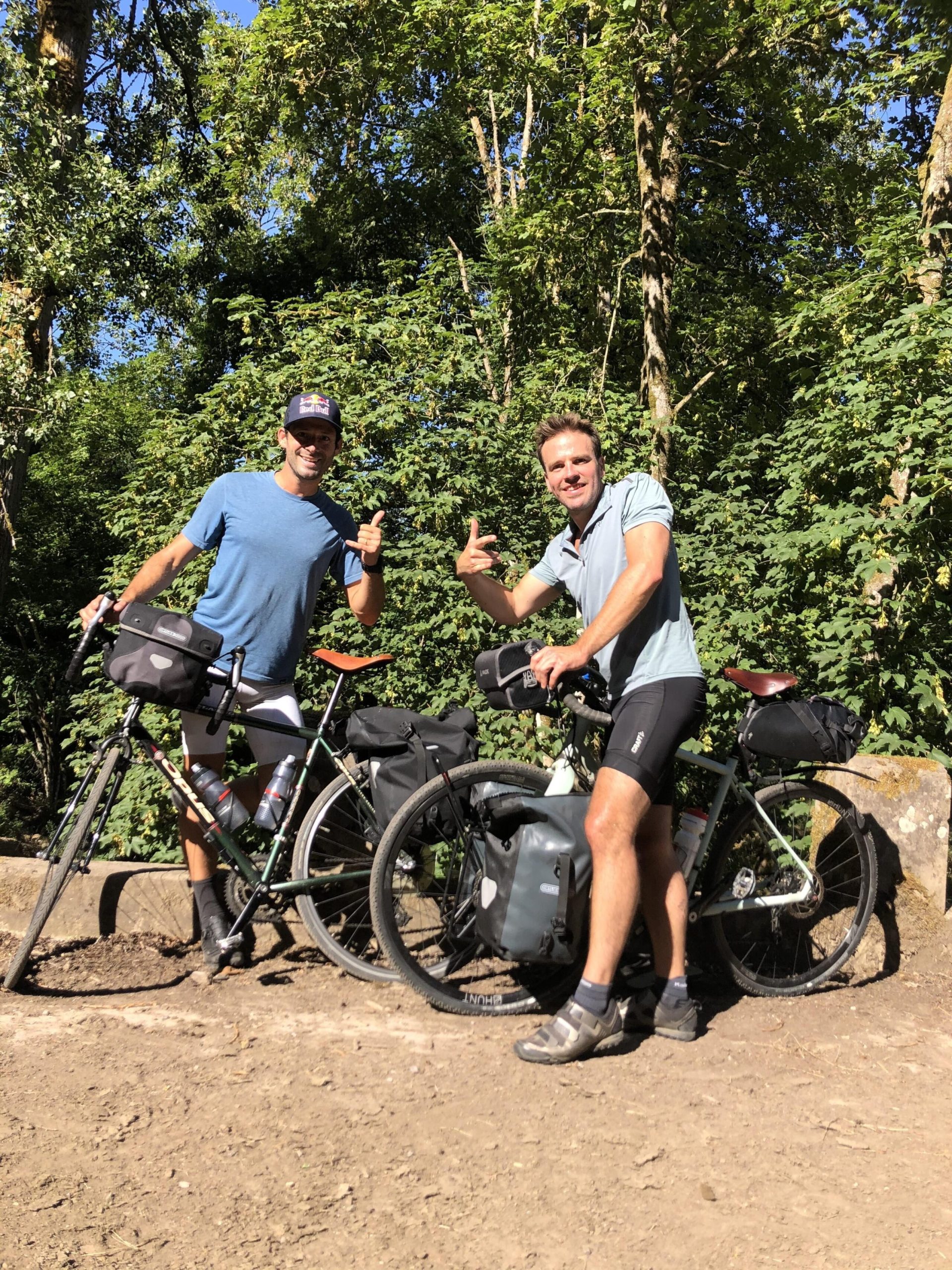
Of course, the car remains a favourite mode of transport. It's almost unbelievable to see how many vehicles are on the road with just one person on board. Within the Search Projects team, everyone regularly uses the BlaBlaCar app, whether to look for or to offer a ride. The fact that carpooling is managed through a platform where everyone must be identified is a guarantee of reliability and safety, and it's often an incredible way to make enriching connections and literally share part of the journey with people you would probably never have crossed paths with otherwise!
"Slow travelling"
I've realised that one of the main obstacles to considering other ways of travelling is time, or more precisely, the lack of it. Yet we need to learn to take our time. This mindset makes it much easier to consider cycling or even walking somewhere. I'm not necessarily talking about long journeys or trips here, but there are often alternatives to the car to be found.
I feel we're making a bit more progress on this every day, and that's really great. When I'm in Belgium, I regularly get around by bike, or I even opt for a car-bike combo. I take my car as far as the outskirts of Brussels, for example, and continue by bike.
Besides, it's not just about "slow travelling". Have you heard of "slow food"? Click here.
Offsetting your CO2 emissions
I chose paragliding as my sport of choice, I restored a sailboat with which I've already crossed the Atlantic twice, I keep questioning my own travel and how I approach it... And yet, yes, I still drive my car and take flights. Because it's part of my job and it allows me to fulfil myself. As I said above, I try above all to own my share of responsibility, both individual and collective. But I don't wish to take an all-or-nothing stance on this. So, for all the trips I make that have an impact – greater or smaller – on the environment, I've decided to offset my CO2 emissions.
Greentripper
 That's why I use the platform developed by Greentripper. The website offers a very simple tool for calculating your CO2 emissions. You can do this for a single flight, for example, or for all your car journeys over a year. At the end of the calculation process, Greentripper works out a financial amount corresponding to the offsetting of those CO2 emissions. You can then pay that amount directly on the platform and choose one of the projects validated and supported by Greentripper to which you'd like to contribute financially. A short clip explains their model and how it works clearly. You can watch it here.
Greentripper was launched by the same teams behind CO2 Logic, who support companies that have chosen to take on the challenge of becoming "CO2 neutral". When Greentripper was launched, I was approached precisely because, in their view, I embodied this dual profile quite perfectly: that of the traveller, of course, but also that of someone who wants to travel responsibly. Since then, I've had the pleasure of being an ambassador for Greentripper, and a few fellow enthusiasts – also very committed to this cause – such as Seppe Smits and Cédric Dumont, have joined me there.
Thank you for the planet!
So there you have my tips and best practices when it comes to travel and limiting, or even offsetting, my carbon footprint. Some people do a great deal, others make a small contribution. But either way, however small our individual effort may be, the only real mistake would be to do nothing at all. So, I'm sure that you, having read this far, are already doing something, or are about to start. And that's where this article will really make sense! :-)
Thank you!
Tom
Cover photo Shutterstock, other photos © Tom de Dorlodot