At a glance
What components make up an electric car battery? How does it work? Will its price fall?
The battery is the heart of the electric car. Everything revolves around this crucial component. The battery determines not only the vehicle's range and durability, but also its total cost. What are the components and characteristics of a battery, and how are its price and lifespan evolving? A great deal of research is being carried out on this subject. Our blogger Alain Dierckx gives us some explanations.
What are the components of an electric car battery?
Experiments with electrically-powered vehicles began as early as the 1970s. At the time, lead-acid batteries were the most common. Today, this is no longer the case: the main components of a battery are now lithium and cobalt, along with, to a lesser extent, manganese, nickel and graphite.
According to the 3rd Redion Belgium Mobility Barometer, 28% of consumers say their decision to switch to an electric vehicle is influenced by possible shortages of raw materials. Battery components are therefore clearly part of consumers' thinking.
Where do the raw materials, lithium and cobalt, come from?
Lithium mainly comes from South American countries, but also from Australia, China and Canada, where there are significant underground reserves. In Europe, lithium is also found in Austria and France, where a company has considered investing in the operation of a large mine.
More than half of the world's cobalt production comes from mines in the Democratic Republic of the Congo, although it is also extracted in North America.
How is the price of a lithium-ion battery evolving?
The price of a battery is expressed in €/kWh and has fallen in recent years to an average of €104 per kWh. Batteries made in China are the cheapest. In other countries, costs are higher, notably because of labour costs. For example, the battery of a 52 kWh Renault Zoe costs around €8,500, or €163 per kWh.
What is the lifespan of new electric batteries?
The first generation of batteries had a lifespan of around ten years, but this is now fifteen years, or even more. Current batteries are designed to last around 1,000 charge cycles and 240,000 kilometres. The general and positive finding is that electric car batteries last longer than expected, and that their capacity therefore remains higher than had been hoped.
Also read the article "The lifespan of car and electric bike batteries."
How does an electric car battery work?
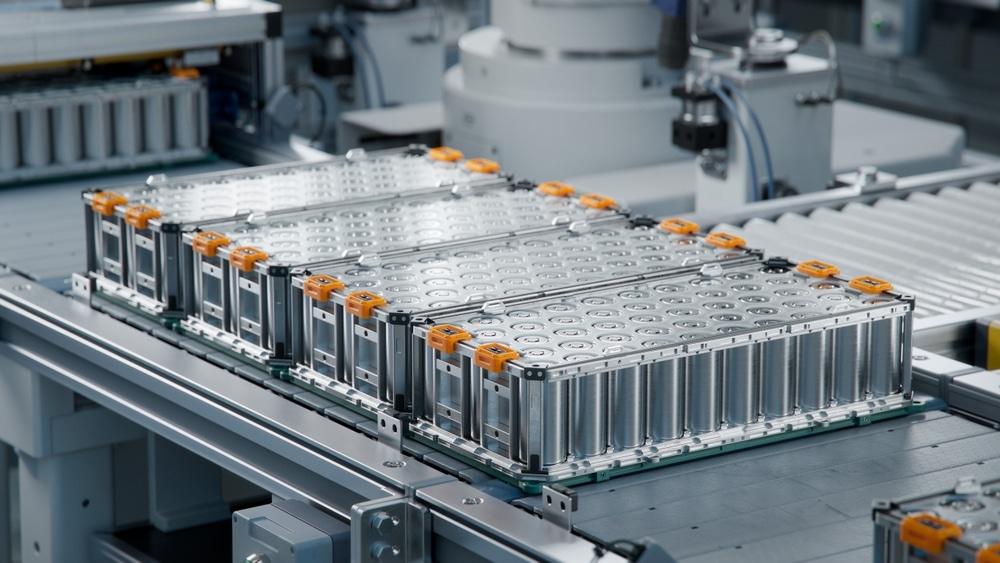 An electric vehicle battery is made up of a large number of electrochemical cells. These cells supply the energy (electricity) needed to activate (run) and control the electric motor. A built-in regulation system ensures that all the individual cells in the battery are charged and discharged evenly.
Conversely, the battery can also generate and store energy while driving. This happens when you release the accelerator and are not braking. The car then automatically slows down and the battery recharges. This is known as "regenerative braking".
Can an electric car battery be reused and recycled?
If a battery is no longer powerful enough to run a car, it can potentially be reused to store electricity from solar panels or wind turbines. Once this lifespan has also come to an end — which can take up to twenty years — it can be recycled.
Car manufacturers are required to collect and recycle used batteries. A European directive requires them to recycle at least 50% of the materials contained in the batteries. By 2025, this figure is expected to reach at least 65%. Today, 70% of components such as cobalt, nickel and copper can already be recycled. Recycling lithium is more difficult, but progress is being made.
Are there alternatives to lithium-ion batteries?
Because of ethical concerns about lithium mining in the Democratic Republic of the Congo, and because lithium reserves are not infinite, intensive research is being carried out to find alternatives to lithium-ion batteries.
Alternative 1: Solid-state battery
In this type of battery, the liquid electrolyte is replaced by a solid. Volkswagen, Toyota and Nissan are conducting intensive research in this area and plan to bring these batteries to market within a few years.
Advantages:
- Lower fire risk
- 40% higher energy storage capacity than lithium-ion
- Faster charging speed
- Lighter weight
Disadvantages:
- High production costs
- Studies into this process are still ongoing
Alternative 2: Lithium-sulphur
Advantages:
- Sulphur is a widely available material
- Lower production costs
- Up to five times more energy storage capacity than lithium-ion
- More environmentally friendly
- Safer
Disadvantages:
- Lifespan is considerably shorter than that of a lithium-ion battery
- Energy losses during charging and discharging
Alternative 3: Lithium iron phosphate
The car brand Tesla has been using this type of battery for some of its base models for several years.
Advantages:
- Long lifespan
- Light weight
- Safer
Disadvantages:
- Slower charging
- Relatively expensive
Want to know more about electric vehicles? Read our other articles on electric vehicles by clicking here.