At a glance
In this article, we answer the following questions:
- What are the features of a good ski helmet?
- Can it be used year after year?
- How much does a good ski helmet cost?
- Is it advisable to rent one on site?
- Can a ski helmet be reused after a collision?
Sam, the blogger behind Check Out Sam, regularly goes on winter sports trips. For him too, safety comes first. So he looked for answers to the most frequently asked questions about ski helmets and shares the results of his research with us.
The features of a good ski helmet
A ski helmet shouldn't just meet safety standards, it also needs to be comfortable.
A good ski helmet is above all sturdy, and it must be well fitted. It's padded with an insulating material used to keep the helmet warm and let it breathe. But a ski helmet is much more than that — other criteria matter too, and they vary depending on who's wearing it.
Ski helmet safety
The main reason to wear a ski helmet is that it provides safety. You have significantly more chance of coming out of a (serious) fall unscathed, or at least of limiting head injuries, if you wear a helmet.
The best way to check a ski helmet's safety is to make sure it meets the CE, ASTM, EN 1077 and/or Snell RS-98 safety standards. These certification marks tell you that the helmet has undergone thorough testing to absorb blows and impacts.
The MIPS label isn't really a certification standard, but rather a system used to absorb impacts before they reach the inside of the helmet. It's therefore strongly recommended to use a helmet with this feature.
Choose a sturdy material
It's clear that safety is closely linked to the strength of the material. The best helmets are made of ABS + EPS or In-Mould.
ABS is a very strong plastic with a layer of EPS on top, a hard foam layer that absorbs impacts.
In-Mould construction also has an absorbent layer of EPS, but it's fused with polycarbonate (a strong, lightweight plastic), which gives these helmets a thinner profile and makes them lighter.
If you're torn between several models while searching for the best helmet, my blog article may well help. Click here and turn on automatic translation to read the article in English. In it, I give ten tips and detailed information on what matters when buying one.
Ski helmet comfort
If a safety helmet isn't comfortable, you'll be tempted to take it off, and then it's of no use at all!
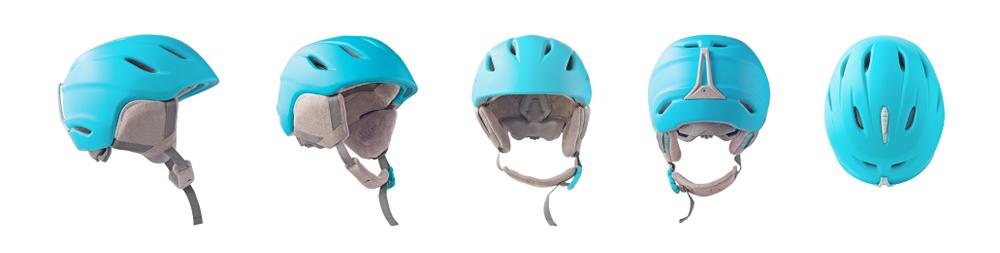
Always go for a helmet that fits your head well. Not only is this important for your safety, it's also much more comfortable. That's why I always recommend trying on a ski helmet before heading out onto the slopes. A device mounted at the back of the helmet lets you tighten or loosen it. Straps at the front are also useful.
If the ski helmet is firmly in place and doesn't move, you've found the right one.
Go for a soft lining or padding, preferably removable. Sweat absorption can cause an odour in the helmet after repeated use. On some models, you can also remove certain padding. That's handy if you don't want to get too hot!
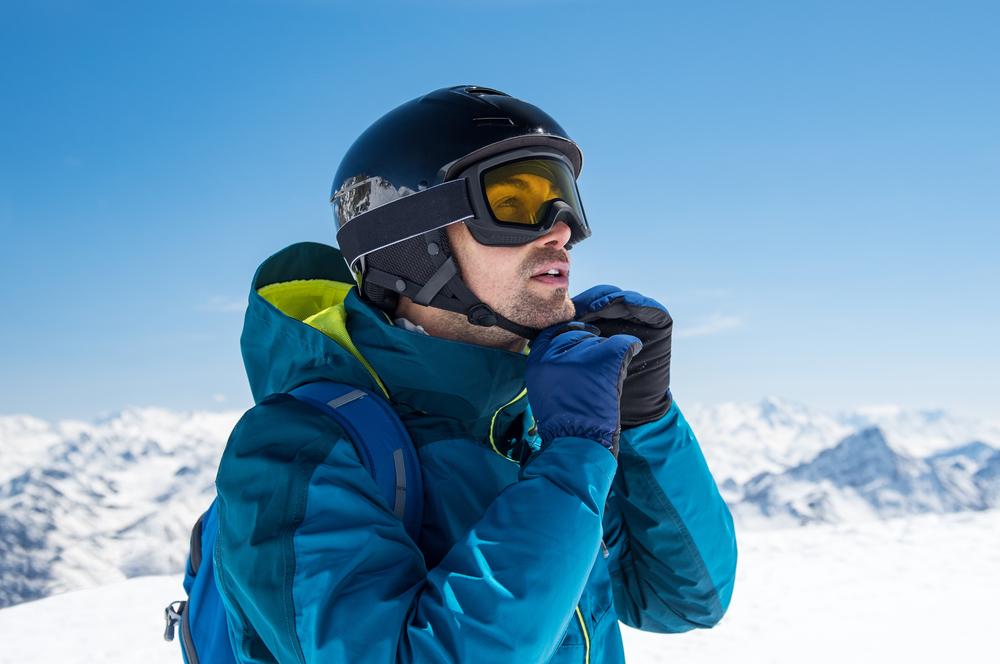
A helmet fitted with integrated ski goggles also offers more comfort. Your field of vision is wider than with separately bought goggles, and glasses wearers can still wear their regular frames under this visor.
Other features of a ski helmet
A good ski helmet undoubtedly has more features, but not all of them relate to comfort or safety. Think about colours, stickers, the option to attach a camera to the helmet...
And yet... the helmet's appearance matters too, because you also want to look good on the slopes. Right?
The importance of a ski helmet for adults and children
A helmet is essential for both adults and children in order to properly protect the head.
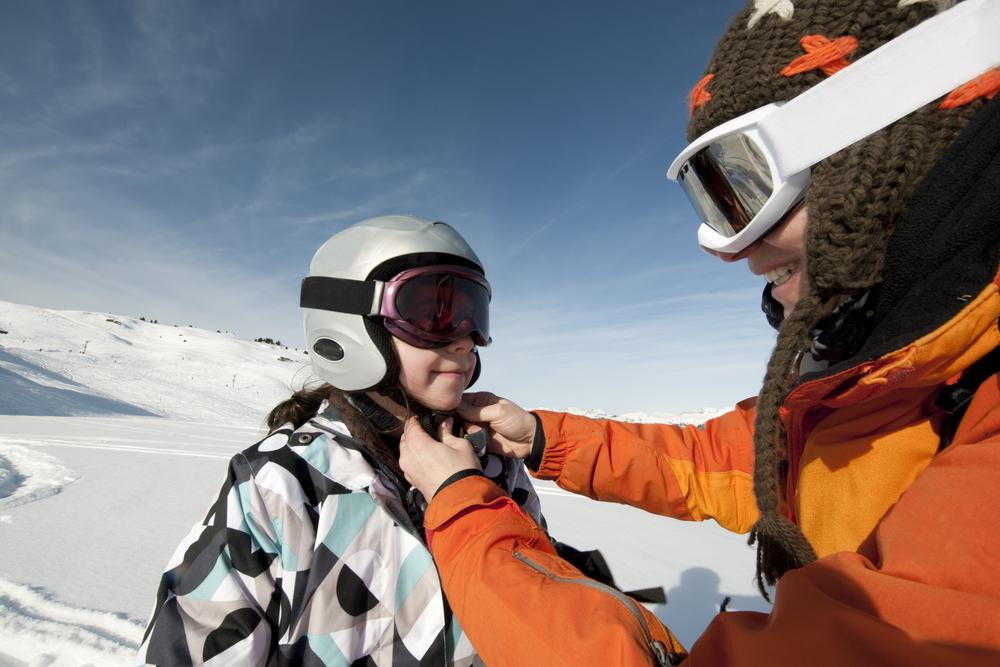
A ski helmet for children is, moreover, mandatory on many ski slopes.
More and more adults are also wearing a helmet. And that's a good thing, because head injuries generally represent a significant percentage of injuries on the slopes among skiers and snowboarders, especially among the youngest.
Make sure your children's helmet doesn't move around. I too often see young skiers on the slopes wearing a helmet that's flopping around on their head. Help your child fasten their helmet properly.
Choose a colourful or striking model to encourage your children to enjoy wearing the helmet. And if they're still not happy about it, attach a camera to their helmet to film their adventures.
Can a ski helmet be reused after a collision?
No. If the ski helmet has taken a hit, a collision or another accident, it needs to be replaced. Tiny cracks or dents (often invisible) can impair the helmet's function and no longer guarantee sufficient protection. The same rule applies to bicycle or motorcycle helmets after an accident.
How many times can you reuse a ski helmet?
If your helmet hasn't been through any accident, you obviously don't need to replace it after every ski trip. However, it's not recommended to use the same helmet for too many years in a row.
Professionals recommend buying a new helmet every three to five years if you only use it sporadically (one ski trip a year). This may seem like a short lifespan, but sweat, bumps caused by chairlifts or knocks during normal use can also affect the helmet's performance over time.
How much does a ski helmet cost?
While it's true that safety has no price, you probably don't want to pay top price either! Fortunately, a good ski helmet is very affordable. You can find children's helmets for around 30 euros, though a flashier helmet will probably cost more.
For adults, you can find a helmet from 50 euros, but good helmets typically go for around 80 euros.
A little tip: after the ski season, you'll often find very good discounted prices.
Renting a ski helmet on site?
You don't have to buy a helmet on your very first ski trip, since you can rent one from a ski rental shop. However, the rental price can easily reach 25 euros per person for a week.
The advantage, of course, is that you have less luggage to carry (and a ski helmet is quite bulky). It's also a good solution if you want to try out the helmet to see if it suits you and if you find it comfortable.
The biggest downside of renting is, of course, that the helmet's condition isn't always guaranteed. How do you know if it's taken a hit or if there's no damage on the inside? What's more, a rented helmet has of course been worn by other people who may have left their scent on it…
The choice is of course yours, but having your own helmet — one that perfectly matches your outfit — is my personal preference. Especially since I go skiing at least once a year!
I wish you lots of fun on the slopes!
FAQ – Everything you need to know about ski helmets
In France: Not mandatory, no general law, but strongly recommended to avoid head injuries. In ski schools, the helmet is mandatory.
In Italy (since 1 November 2025): a general requirement for all skiers, snowboarders and tobogganers on marked slopes. The helmet must be CE certified and approved. Penalties: fines of €100 to €200 and withdrawal of the ski pass.
In Austria: mandatory for under-15s in most regions. In Switzerland and Germany: not mandatory, but strongly recommended.
About "Check Out Sam"

Sam is a globetrotter at heart. Since the age of 18, he's travelled across continents as a true "digital nomad". Sometimes he just stays put, but he never stays idle for long. Wherever he goes, he gathers information which he writes up on his blog as practical travel guides: places to visit, useful tips, unusual places to stay and, of course, wonderful travel stories accompanied by stunning photos. To find the inspiration and information you're missing, just head over to Check Out Sam!
First published: 01/2021 - Updated: 01/2026