At a glance
The number of accidents involving soft mobility users has increased in recent years. Discover how to get around safely.
The number of types of vehicles on the road has increased a great deal in recent years. New vehicles such as scooters, speed pedelecs, cargo bikes and many others all fall under the definition of "soft mobility" (or micromobility). These vehicles make traffic increasingly complicated, as each vehicle requires its own space to move. This sharing of available space sometimes leads to dangerous situations and generates a lot of frustration. That's at any rate what emerges from the results of Redion's 2025 Mobility Barometer:
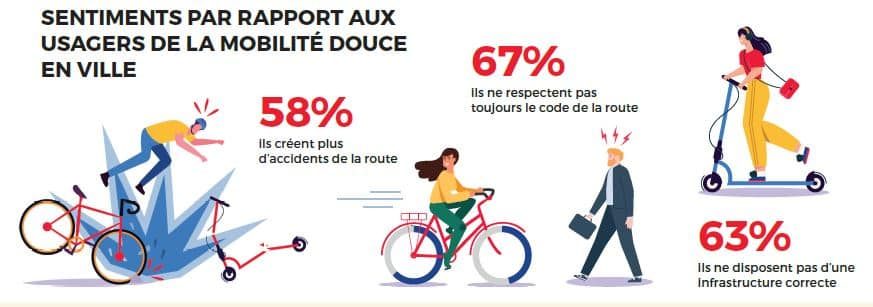
As a road user, how can you best protect yourself from these dangerous situations? Our blogger Alain Dierckx gives us a few tips.
What is soft mobility?
The term "soft mobility" refers to all personal means of transport that have a minimal impact on the environment. Cars (including electric vehicles), vans, trucks and other motorized two- or four-wheeled vehicles therefore don't fall into this category.
Examples of soft mobility include classic and electric bicycles, cargo bikes, (e-)scooters, e-skateboards, hoverboards, segways, electric unicycles and, broadly speaking, all variants of two-wheeled vehicles, provided they aren't powered by fossil fuels.
How risky is soft mobility?
Statbel figures for 2023 show that the largest number of fatal accidents on our roads involved motorists (212 cases). Cyclists came in second in these sad statistics (101 cases), despite their far smaller numbers as road users.
As a general rule, the growth in the use of bicycles and other soft mobility devices since 2020 has sharply increased the number of accidents involving this type of mobility.
Injuries caused by electric bike and speed pedelec accidents are also more severe than those affecting classic bicycle users.
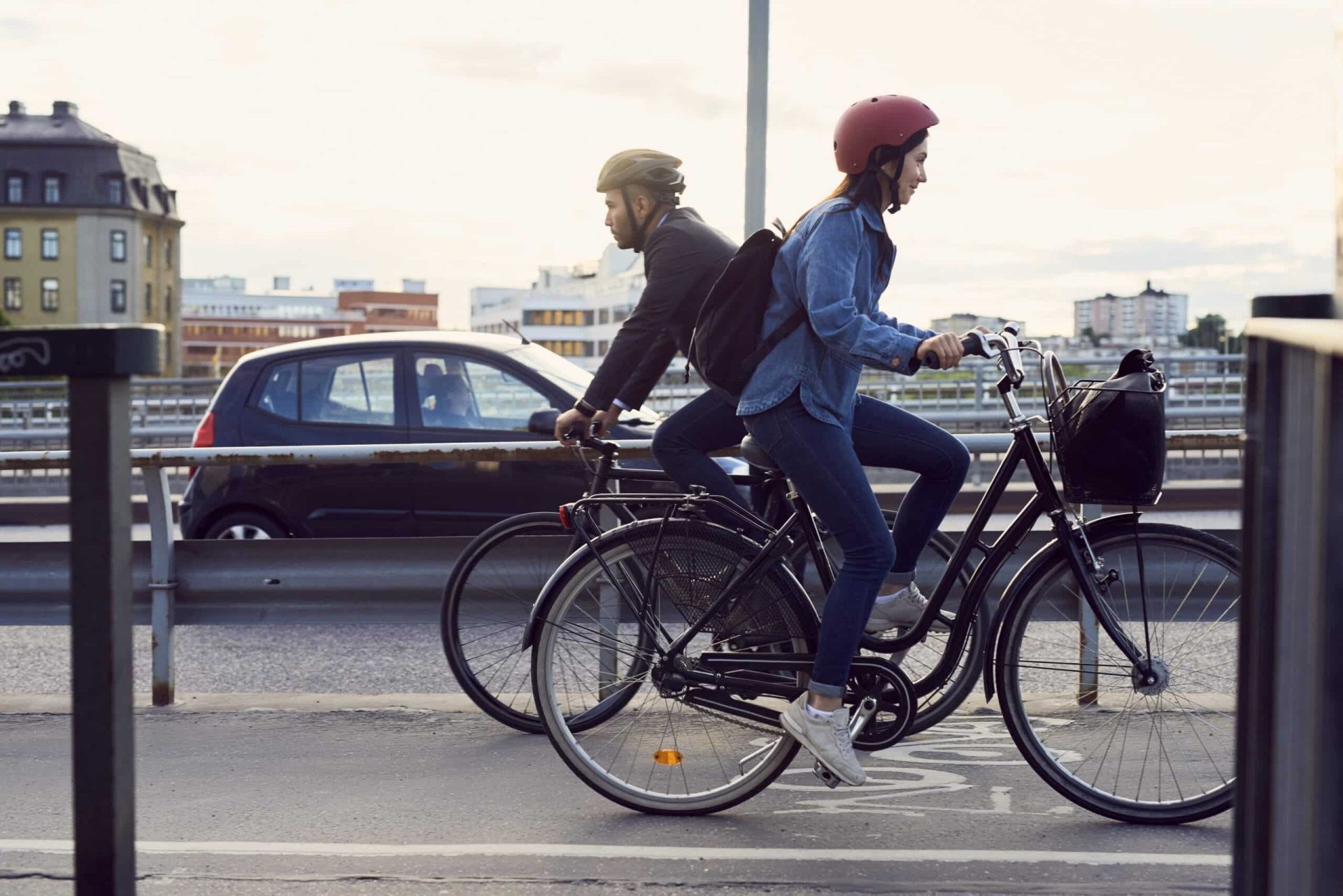
How can you protect yourself well on a bicycle?
Wear a bicycle helmet
While a helmet is not mandatory in Belgium for classic bicycles and electric bikes with a maximum speed of 25 km/h, it is nevertheless strongly recommended. See the article "Choosing a good bicycle helmet" on this topic.
Be visible
The law requires the use of reflectors on the bicycle. There must be a white reflector at the front of the bike and a red reflector at the rear. Each pedal must be fitted with a yellow or orange reflector. Both tires must have a white reflective strip around their circumference, or two orange reflectors per wheel.
Wear a fluorescent jacket
Wearing a fluorescent jacket isn't mandatory, but is recommended. A fluorescent jacket helps you stay visible in the dark, but also during the day and at times when visibility is poorer (overcast weather, rain, fog...).
How can you protect yourself on a speed pedelec?
Wear a helmet
In Belgium, wearing a bicycle helmet is mandatory for riders of speed pedelecs and electric bikes capable of going faster than 25 km/h. The helmet must comply with the EN1078 standard (with protection for the temples and back of the head) or the ECE R22.05 standard.
Be visible
The same rules as for bicycles apply. Reflectors are mandatory. There must be a white reflector at the front and a red reflector at the rear. Each pedal must be fitted with a yellow or orange reflector. Both tires must have a white reflective strip around their circumference, or two orange reflectors per wheel.
How can you protect yourself on an electric scooter?
Wear a helmet
Wearing a helmet isn't mandatory on a scooter, but is strongly recommended. If the device has a seat and reaches speeds between 25 and 45 km/h, wearing a helmet is mandatory.
Be visible
Reflectors are mandatory. There must be a white reflector at the front and a red reflector at the rear. There must be a yellow or orange reflector on each side. Both tires must have a white reflective strip around their circumference, or two orange reflectors per wheel.
Get lighting
Buy a scooter fitted with LED lights at the front and rear, or install such lights yourself.
How can you protect yourself on an e-skateboard, a hoverboard or an electric unicycle?
Wear a helmet
Wearing a helmet isn't mandatory but is strongly recommended. Also wear elbow pads and knee pads. Be visible by wearing reflective clothing, and equip yourself with a small light on the front and back of your body in case of poor visibility or bad weather conditions.
10 tips for riding responsibly and safely
- Use approved mobility devices that comply with the law;
- Always stay aware of your surroundings, avoid music headphones that prevent you from hearing what's going on around you;
- Look far ahead and anticipate traffic;
- Have a good knowledge of the highway code and follow traffic rules;
- Signal any change of direction with your arm;
- Watch out for other vehicles' blind spots;
- Properly maintain your vehicle;
- Don't use a smartphone or other devices that distract you while riding;
- Never ride under the influence of alcohol, drugs or other similar substances;
- Ride with courtesy, take vulnerable road users into account and avoid weaving between other vehicles.