At a glance
Child seats are the ideal solution for carrying your young children on bike rides. How do you choose the right model for you?
We all know the joys of recreational cycling. This activity becomes even more enjoyable when you can bring your young children along. But how do you carry them safely on the bike?
Bike seats for children (or babies) are the ideal solution. You can fit them at the front or the back of your bike, or even in both places. What does the law say and how much protection do they offer?
Our blogger Alain Dierckx gives an overview below.
Bike seats for children: what does the regulation say?
You can only carry a child on your bike if it's fitted with a suitable seat. The European safety standard EN 14344 governs the safety of children's bicycle seats. It sets out the requirements that child seats must meet. So there's no question of "making" a seat yourself.
Here are a few important points:
- It must be impossible for the child to open their own belt.
- Seats must have undergone a number of durability tests before being put on sale.
- Bicycle seats must be fixed at the front or the back (on the frame or the handlebars).
- The child's feet must be fully protected from the wheel spokes.
What are the different types of bike seats for children?
There are child seats for all types of bikes: traditional bikes, mountain bikes and electric bikes. There are many models and brands on the market, with prices and designs that vary considerably. What's important is the distinction between the different age categories. This depends, of course, on the child's size and weight category. We strongly recommend sticking to these age categories when buying a bike seat.
The differences between models mainly relate to head and foot protection, the number of seatbelt attachment points and the overall safety of the seat. The shock-absorbing quality of the material used also affects the price. These range from around €60 to €150.
A front or rear bike seat for children?
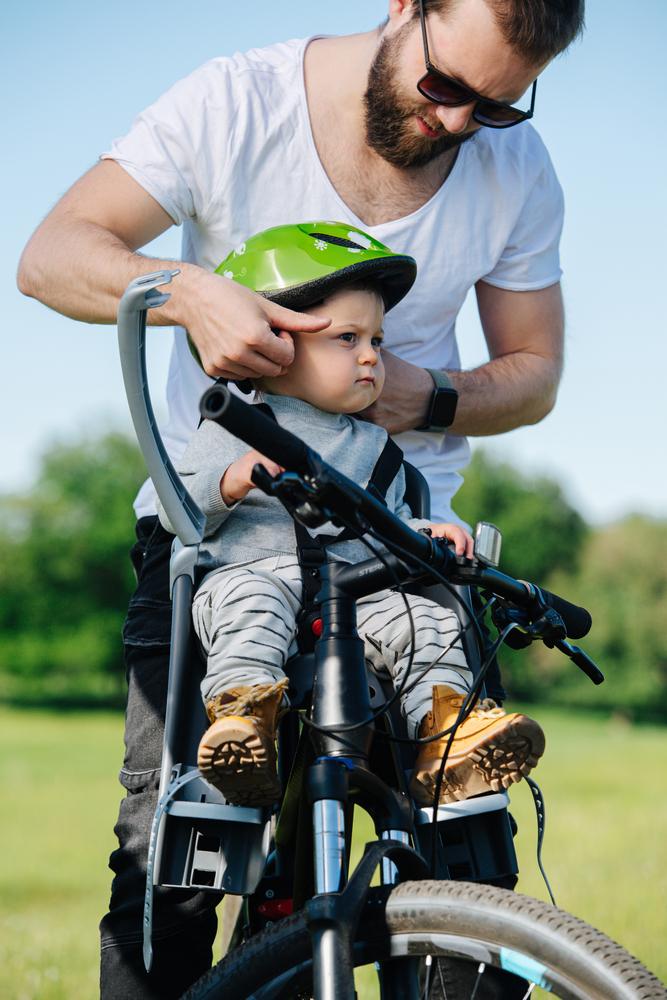
Front seat
Bicycle seats designed to be fitted at the front of the bike are mounted on the steering tube. This fitting is generally easy and can be done quickly. Since the child is more exposed to rain and wind than with a rear-mounted bike seat, some brands offer an optional rain and wind guard. Front-mounted seats are particularly suited to children weighing up to around 15 kg (from around 9 months to 3 years old).
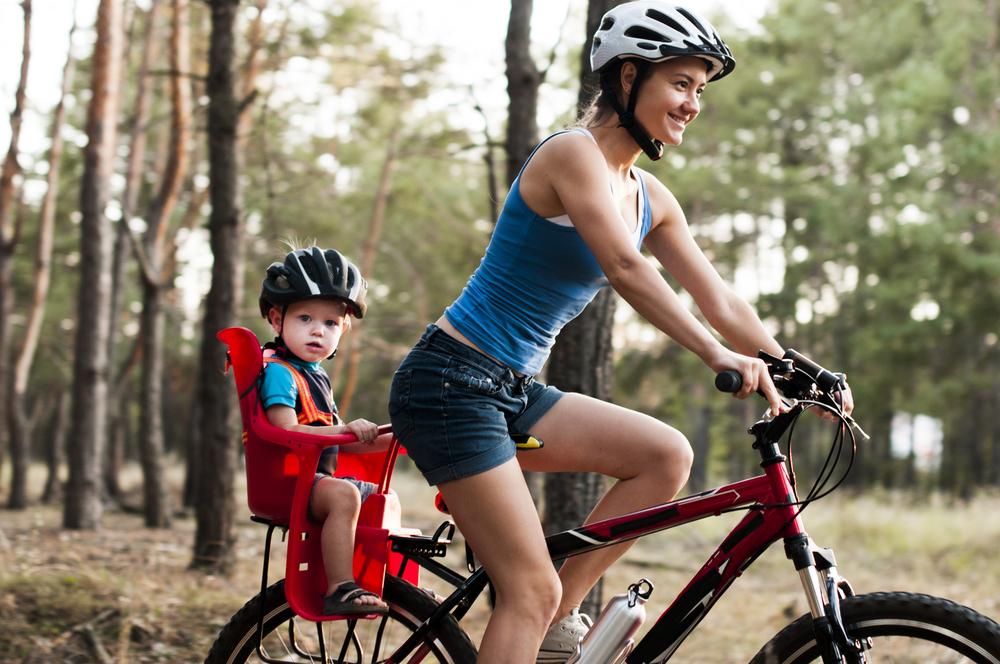
Bicycle seats meant to be fitted at the back of the bike are mounted on the luggage rack. They offer children better protection from rain and wind, as you're sitting in front of them. The downside is that you have less contact with the child and can't see if something's wrong. Rear-mounted seats are suitable for children weighing 15 kg or more. From a body weight of 22 to 25 kg (9 to 10 years old), children should start learning to ride their own bike.
Tandems and triplets
Want to fit two child seats one behind the other on your bike? In that case, you'll need to buy a tandem bike or a triplet bike. Bicycles of this type have an elongated frame and an elongated luggage rack. The Bicicapace brand is one example.
This type of bike is very stable. The downside is their high purchase price, which can reach €1,500, or even €5,000 for luxury models.
Or why not a bike trailer or a cargo bike?
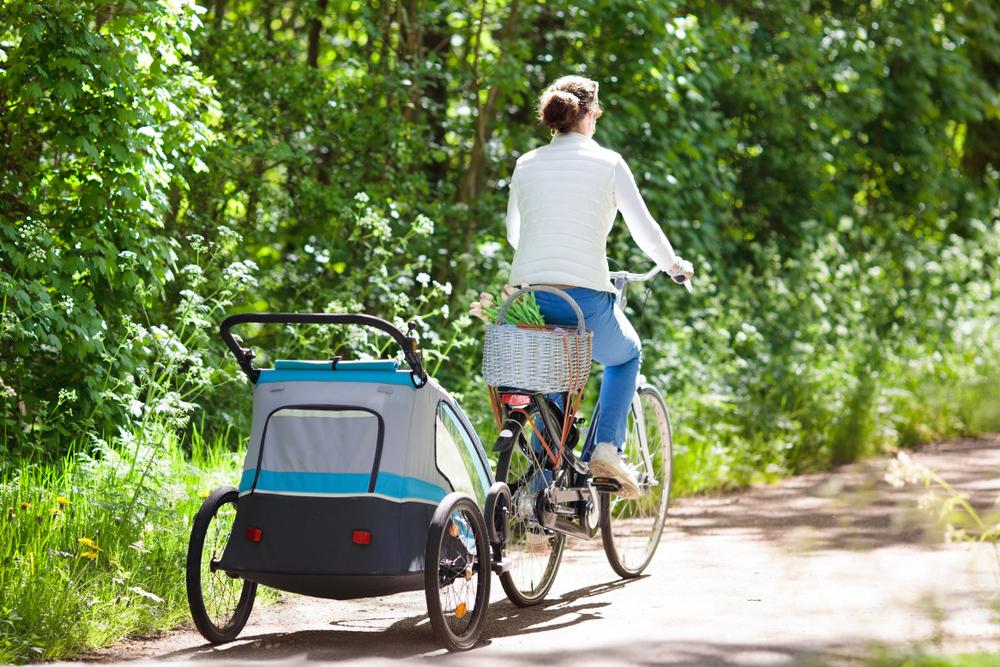
Trailer
A bike trailer attaches to the back of your bike and can be used to carry two children, which is very handy if you have twins or if there's little age gap between your children. You can carry them up to around 7 years old.
To improve the trailer's visibility, it's recommended to fit a small safety flag on it. Another useful tip is to fit a mosquito net or cover it, not only to protect them from rain, but also to make sure they don't catch their fingers on the outside of the trailer.
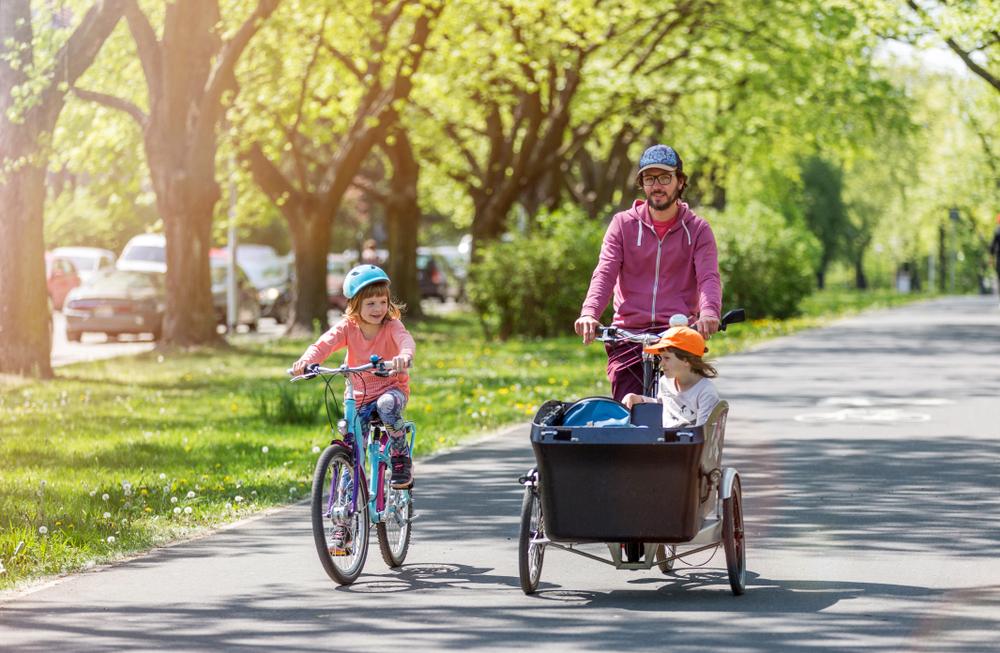
Cargo bike
A cargo bike lets you place children at the front in a box (usually made of wood).
The advantage is that you can keep an eye on the children and you have a sturdy build. This system also allows you to carry luggage.
The downside is the higher purchase price, even if you choose a model without pedal assist for the box.
Tips and tricks about bike seats for children
- When buying, check whether the "EN 14344" standard is mentioned on the seat.
- Fit a double kickstand on your bike so it stays stable when you put your child in or take them out.
- Protect your young passengers' heads by fitting them with a helmet.
- Don't carry children under three months old on your bike due to the jolts caused by riding. Only put your child in a child seat from nine months old, and once they can sit up on their own.
- Protect your child by dressing them according to the weather and avoid clothes with long strings.
- Choose a seatbelt with as many attachment points as possible (3, 4 or 5-point harness).
- Bike seats designed to be mounted at the front of the bike only fit on the steering tube to which the handlebars are attached.
- When buying a rear-mounted seat, pay attention to the width of the luggage rack.
- Take into account the road you'll be riding on regularly (a road in poor condition causes jolts, a route with lots of hills will require a lot of effort). If possible, test it out before buying. Also remember that your child will grow quickly and therefore become heavier!
- Choose a seat with a high backrest and easily adjustable straps.
- If the seat is mounted on the back of the frame rather than on the luggage rack, it will absorb fewer shocks. Ask a specialist for advice.
And finally: looking for peace of mind? Discover BIKE, Redion's cycling assistance.
Also read:
- Choosing the best bike rack\