At a glance
Biometrics scans your retina or analyses your fingerprint for stronger cybersecurity. How does it work? Is it foolproof?
Biometrics scans your retina or analyses your fingerprint for ever-stronger cybersecurity. How does it work? Is it foolproof?
What exactly is biometrics?
According to the "Le Robert" dictionary, the definition of biometrics is:
- The science that studies biological variations within a given group using mathematical tools.
- The analysis of physical characteristics that are strictly unique to a person (voice, face, iris, fingerprints…).
We're all familiar with the uses of biometrics thanks to police dramas and spy films. A robber who leaves a fingerprint, a murderer identified through DNA, a man spotted in a crowd thanks to facial recognition…
Biometric authentication: an everyday use
But biometrics is also increasingly used to secure our personal data. This is known as biometric authentication. Some of you even use it every day:
- You unlock your smartphone in the blink of an eye
- You pay contactless with your phone with a tap of your thumb
- You log in to your online bank by identifying yourself with, for example, Itsme, which combines a code with a fingerprint scan
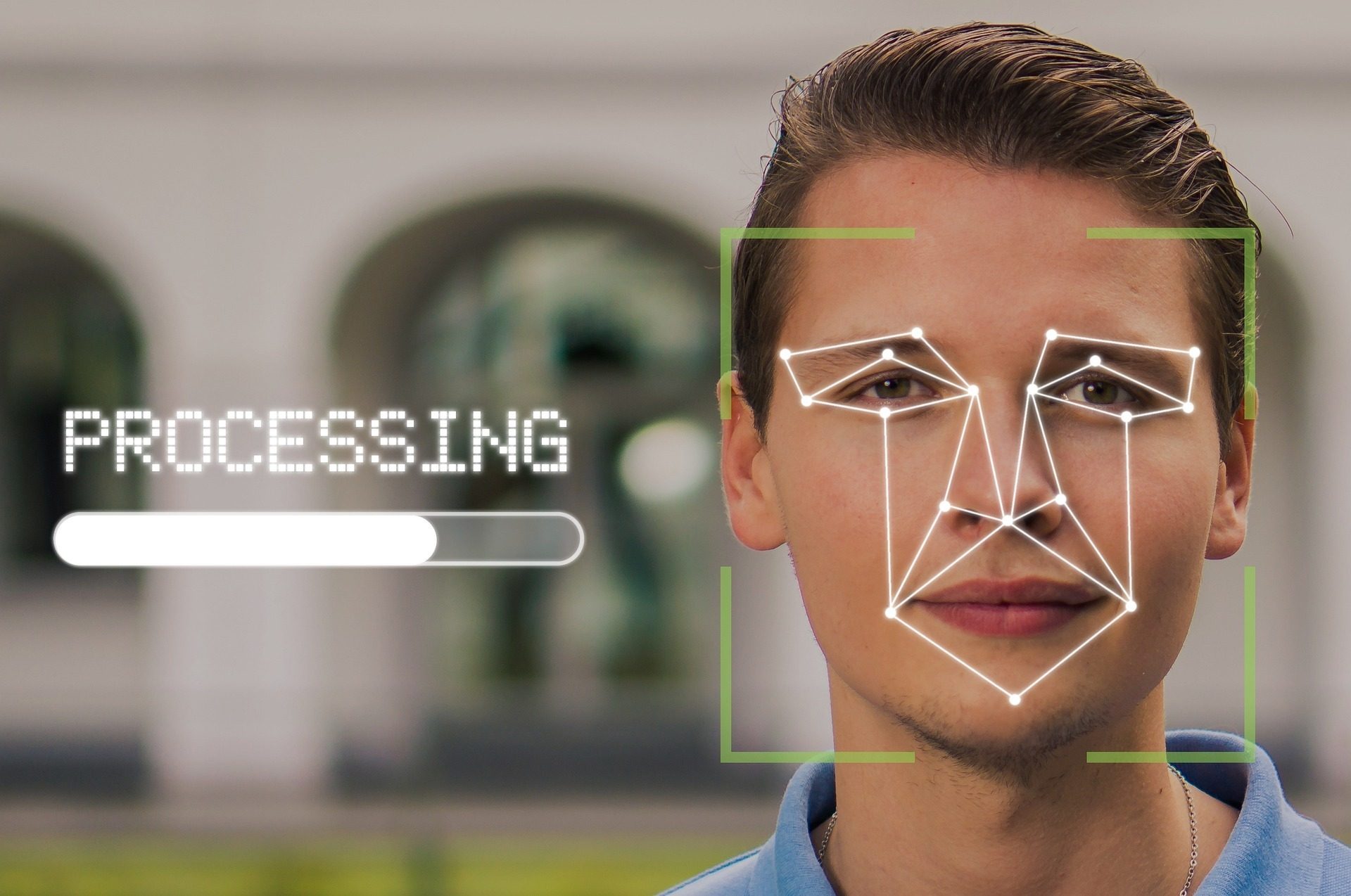
Biometric authentication doesn't stop there. Your passport is biometric. Some places, such as Google's server farms, are accessible only via a retina scan. Surveillance cameras can analyse not only a face, but also a person's behaviour.
All these systems can be used to ensure your (cyber)security.
The upsides of biometrics
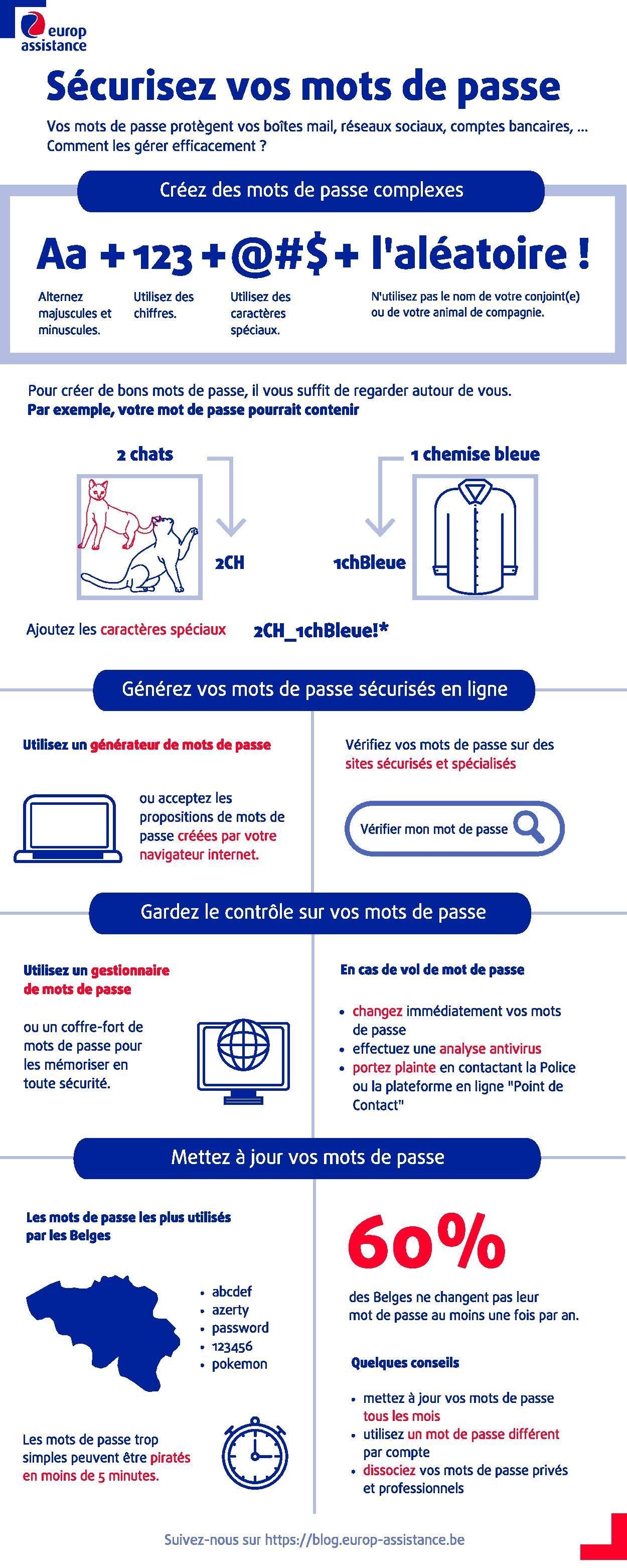
With the use of biometric authentication, the text-based password disappears. And even though we're sure that, since our infographic on secure passwords, you've strengthened your cybersecurity, a password is still an element that can easily be hacked.
Biometrics can be useful for two-factor authentication: for example, I place my fingerprint and then enter a code sent by text message.
Authentication that uses your own characteristics means you'll no longer need to remember your codes, since your means of identification is always with you.
Biometrics is based on physical traits that don't change over time: you have the same iris and the same fingerprints at 20 as you do at 60.
The downsides of biometric authentication
The advantage of always having your means of identification on you is also a drawback. Indeed, someone could unlock your phone by pressing your finger onto the sensor while you're asleep, or by force.
Some biometric traits change or disappear after an illness or an accident. The same goes if your fingers are dirty or your voice is hoarse: biometric authentication might then fail.
For your biometric traits to be recognised, they must be stored in a database. And that database can be hacked. This is extremely damaging, particularly because you can't change your biometrics!
Biometric authentication also raises ethical questions about freedom and anonymity. If biometrics were to become the norm, we would then need to ask ourselves about the use of this data, and about the line between private and public life…
Biometrics is therefore a genuine ally for your cybersecurity. But it doesn't protect you from everything, such as email hacking attempts. In fact, do you know how to spot a fraudulent email ?
Article written in collaboration with We are the Words.