At a glance
This guide brings together all the essential information for travelling to Brazil: emergency numbers, travel documents, health and safety advice, driving rules, activities by season, culinary specialities and useful expressions in Portuguese.
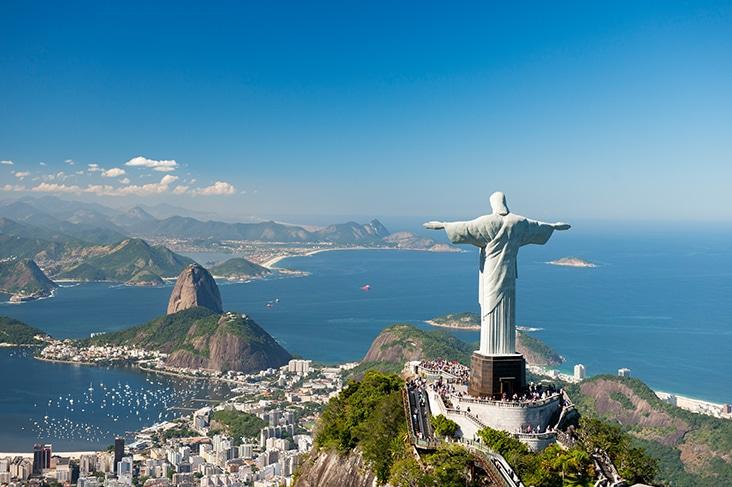
Brazil is a destination best experienced on a grand scale. The fifth largest country in the world by area, it stretches from the golden beaches of Rio de Janeiro to the depths of the Amazon, taking in the bustle of São Paulo and the landscapes of the Pantanal along the way. Each region has a distinct identity, combining cultural rhythms, exceptional biodiversity and colonial architecture.**
**For Belgian travellers, Brazil represents a complete change of scenery: a different language, a different continent, a different relationship with time. A far-off destination, certainly, but one that is now well served, appealing equally to adventure seekers and to travellers looking for beaches or great food.
Emergency numbers: who to call in the event of a major problem?
In Brazil, emergency numbers are three-digit numbers, the same throughout the country:
- European emergency number: 112 (redirected to local services)
- Military police: 190
- Federal highway police: 191
- Ambulance (SAMU): 192
- Fire brigade: 193
- Federal police: 194
- Card Stop (lost or stolen credit cards): +32 78 170 170
- Doc Stop (lost or stolen Belgian ID card or passport): +32 2 488 21 23
- Belgian Embassy (in Brasília): +55 61 344 311 33
Assistance: Redion (Belgium)
In the event of an emergency, contact local emergency services first!
– Want to reach Redion for a medical or technical problem (e.g. car breakdown)? Do so via the Redion app (downloadable from the Apple Store or Google Play)
– Want to reach Redion for an administrative request or a contract change? Do so via the Customer Area of the website: https://www.redion.be
How can you travel through Brazil with peace of mind?
Brazil is a vast country, with realities that vary greatly from one region to another. Good preparation is essential before you leave: having your documents in order, suitable medical cover and an understanding of the security context will let you approach this trip with confidence. The information below will help you anticipate the key steps.
What travel documents do you need to visit Brazil?
To enter Brazil from Belgium, you must hold a valid passport, whose validity covers at least the length of your stay. Holders of a Belgian passport are exempt from a visa for tourist stays not exceeding 90 days within a 180-day period.
On arrival, a stamp is added to your passport and the Brazilian authorities require you to show a return ticket. It's also advisable to bring photocopies of your official documents and keep the originals somewhere safe.
Before you leave, register your trip on the Travellers Online website of the Federal Foreign Affairs Department, which can then keep you informed and provide support in the event of a major problem.
What is healthcare like in Brazil?
The Brazilian healthcare system includes both public and private facilities. Public hospitals are often overcrowded and the standard of care can vary by region; it is particularly limited in the north, north-east and centre-west of the country. Private clinics generally offer higher-quality care, but their rates are high.
If you need medical help abroad, Redion can arrange your care or repatriation 24/7.
Redion recommends taking out travel insurance covering medical costs and repatriation to avoid heavy debt if something goes wrong. Note that annual contracts offer a higher reimbursement limit than temporary ones.
What vaccination recommendations apply for Brazil?
No vaccination is mandatory to enter Brazil. However, the Federal Foreign Affairs Department recommends medical insurance covering repatriation. If you plan to visit the Amazon or the Pantanal, vaccination against yellow fever is strongly recommended.
For more information, see our guides on tropical diseases and recommended or required vaccinations for travellers.
How safe is Brazil?
Brazil has a high crime rate, particularly in urban centres and disadvantaged areas. Vigilance is needed in all major cities, including central districts and tourist areas. Rio de Janeiro's beaches are notably among the areas flagged for theft.
A few practical precautions:
- Avoid favelas and isolated places, especially after dark.
- Don't take your phone or valuables out on the street.
- Prefer official taxis or transport apps.
- During Carnival (Rio, Salvador, São Paulo, Recife), take extra precautions.
- In the Amazon's border areas (particularly with Venezuela), caution is essential. Some areas are not recommended. Check the latest safety guidance on the Federal Foreign Affairs Department's website: https://diplomatie.belgium.be/fr/pays/bresil/voyager-au-bresil-conseils-aux-voyageurs/securite-generale-au-bresil
- Keep any valuables in a safe at your hotel.
- Make a copy of your official documents and keep them somewhere safe — in a safe, online storage, or a copy in your email inbox.
For up-to-date safety advice, check the Federal Foreign Affairs Department's website: https://diplomatie.belgium.be
What is the cost of living and what payment methods are available?
Brazil is a fairly expensive country for small budgets, although this depends on the exchange rate, which fluctuates quite a bit. In major cities, such as Rio or São Paulo, the cost of living is close to what it is here. Even medium-sized cities like Belém and Manaus aren't cheap.
Most credit cards are accepted in Brazil. With an international card fitted with a chip or with the Maestro function, you can withdraw cash from ATMs. Be careful though, as they're rare in some regions and withdrawal limits are relatively low.
To avoid hassle and fees, it's therefore advisable to bring some cash and to pay by card as much as possible.
If you're carrying foreign currency when entering Brazil, you must declare amounts over 10,000 BRL.
What are the driving rules in Brazil?
Driving in Brazil can be demanding, particularly in major cities like São Paulo or Rio de Janeiro. The road network is extensive, but its condition varies greatly: decent between major cities, it deteriorates considerably in the north of the country. Plan ahead and drive defensively.
Driving licence and assistance cover
To drive in Brazil as a tourist, your Belgian driving licence is accepted for 180 days from the date you enter the country. However, we recommend carrying an international driving licence.
To rent a vehicle from a rental company, an international driving licence is generally required. Check the conditions with your rental agency before you leave, as well as the terms of your travel insurance. Note that Redion does not cover vehicles outside Europe.
Please note: driving under the influence of alcohol is punished very severely in Brazil: the legal limit is almost zero (0.04 g/l). Checks are frequent and penalties can include imprisonment.
Speed limits
- In built-up areas: 50 km/h (can vary from 40 to 60 km/h depending on the city)
- On roads outside built-up areas: 80 to 100 km/h
- On motorways: 110 km/h
Practical tips
- Avoid driving at night: roads are often poorly lit and their condition can be poor.
- In traffic jams, keep your windows and doors closed. Thefts have been reported while stopped.
- Be extra vigilant at traffic lights, especially in the city.
- Tolls are frequent: bring change, as credit cards aren't always accepted.
- Off the main routes, roads can become impassable during the rainy season (October to June depending on the region).
How can you get around in Brazil?
While renting a car is an option, the state of the roads and the distances involved can be a drawback, especially if you want to see a lot of the country.
If you only have 2 or 3 weeks and want to see as many regions as possible, domestic flights are almost unavoidable, but be aware that flying in Brazil is comparatively more expensive than in Europe.
Trains barely exist, except as a local curiosity, for reaching the outskirts of Rio or São Paulo, connecting Belo Horizonte to Vitória on the coast, or taking a step back in time on a steam locomotive for a handful of kilometres.
That leaves the bus, by far the best way to get around within a single state or between neighbouring states. The network is well organised and the vehicles are comfortable, safe and punctual. One tip: in high season, book your tickets as soon as you arrive in your stopover town. You'll find the list of bus stations and different companies on the TransPortal website.
What can you see in Brazil depending on the season?
Brazil is a country the size of a continent, and its climate varies considerably from one region to another. There's no single ideal season: it all depends on your destination and your planned activities. Here are a few useful pointers to help guide your choice.
The dry season (May to September)
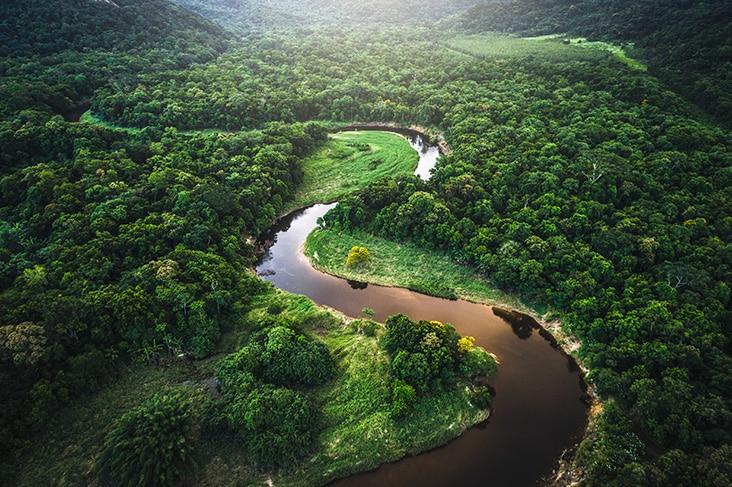
This is the most popular time to travel to Brazil in most regions.
- In Rio de Janeiro, the weather is sunny and temperatures remain pleasant for exploring the city and its beaches.
- This is the best time to visit the Amazon and the Pantanal: the waters recede, making it easier to spot wildlife.
- In the Nordeste (Fortaleza, Natal, Maceió), temperatures are stable and the beaches are accessible all year round.
The rainy season (October to April)

The wet season brings heavy rain, often in short afternoon downpours. It doesn't rule out travel, but it does call for a few adjustments.
- Carnival, one of the most famous festivals in the world, takes place in February. Rio, Salvador, Recife and São Paulo are the main centres of festivities — but also areas requiring extra vigilance against theft.
- Rainforests are more lush, but some forest trails and rural roads can become impassable.
- The southern regions (Porto Alegre, Florianópolis) experience a cooler winter between June and August.
Before you leave, check the local weather forecast for your itinerary. Weather conditions vary greatly between the tropical north and temperate south of the country.
What is the local climate like?
The first thing to bear in mind: since the country is in the southern hemisphere, the seasons are reversed compared to here. Second, remember that the country is so vast that there isn't just one climate, but several, depending on which region you're in.
The coast has an almost Mediterranean climate — mild winters, hot summers — but the South and the north-eastern states close to the equator can be stifling during the southern summer. Also watch out for tropical rains, sometimes torrential, which can disrupt your trip.
Did you know?
Brazil is the only South American country where Portuguese is the official language — a legacy of Portuguese colonisation in the 16th century. This fact often comes as a surprise: in the middle of a Spanish-speaking continent, Brazil is a linguistic island in its own right, with a culture, music and identity that are profoundly distinctive. This is a legacy of the Treaty of Tordesillas, signed on 7 June 1494 as part of the process of the great voyages of discovery. This agreement was signed following Christopher Columbus's first voyage across the Atlantic Ocean, in order to divide the colonial exploration and exploitation of these territories, considered terra nullius, between Spain and Portugal.
Other practical information about Brazil
- Capital: Brasília
- Official language: Portuguese
- Currency: Brazilian Real (BRL) — 1 BRL ≈ €0.24 (variable rate)
- Area: 8,515,767 km²
- Population: Around 215 million inhabitants
- Time zone: UTC-3 to UTC-5 depending on the state (2 to 4 hours behind Belgium)
- Tourist office: visitbrasil.com
- Belgian Embassy in Brazil: brazil.diplomatie.belgium.be
What are Brazil's culinary specialities?
Brazilian cuisine reflects the country itself: diverse, mixed and generous. It blends indigenous, African, Portuguese and Asian influences, with strong regional variations. Here are a few must-tries.
The must-tries
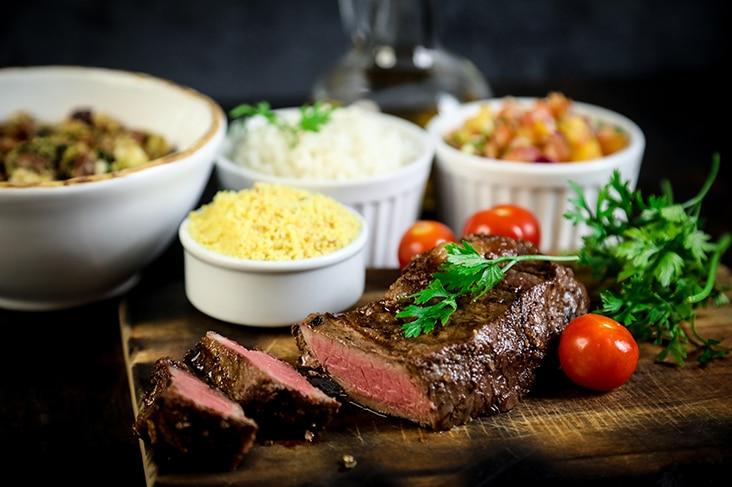
Churrasco
Feijoada: an iconic stew of black beans, pork and beef, served with rice, farofa and orange. Brazil's national dish, traditionally served on Saturdays.
- Churrasco: meat grilled on a skewer, served all-you-can-eat in churrascarias. An institution throughout the country, especially in the south.
- Coxinha: a dumpling filled with shredded chicken, breaded and fried. The country's most popular street snack.
- Pão de queijo: a small cheese bread made from cassava flour, soft and slightly crispy. A breakfast must-have.
- Moqueca: a fish or prawn stew cooked in coconut milk and dendê (palm) oil. A speciality of the Nordeste, particularly in Bahia.
- Açaí na tigela: açaí pulp served in a bowl, with granola, banana and honey. Found everywhere on the beaches and in juice bars.
Typical drinks
- Caipirinha: the national cocktail made with cachaça (sugar cane spirit), crushed lime and sugar. A must-try.
- Guaraná: a fizzy drink made from the berry of the same name, slightly sweet and very popular among Brazilians.
- Suco de fruta: fresh fruit juice, made to order in lanchonetes. Mango, passion fruit, açaí or cashew — an incomparable freshness.
Some basic words and expressions
Brazilian Portuguese is the key to making a warm connection with the locals. A simple linguistic effort is always appreciated. Here are a few useful expressions before you go:
- Olá / Oi: Hello / Hi
- Bom dia / Boa tarde / Boa noite: Good morning / Good afternoon / Good evening
- Sim / Não: Yes / No
- Obrigado(a): Thank you
- Por favor: Please
- Com licença: Excuse me
- A conta, por favor: The bill, please
- Quanto custa?: How much does it cost?
- Onde fica o banheiro?: Where is the bathroom?
- Tchau: Goodbye
Most emergency operators only speak Portuguese. It may be useful to have access to a translation app if needed.