At a glance
Turkey offers a wealth of cultural and geographical riches. Follow the advice in this guide to prepare your trip well.
In this article we give some useful tips and information for travellers heading to Turkey, such as emergency numbers, travel documents, health, safety, driving rules, seasonal activities, plus a few culinary specialities and useful phrases.
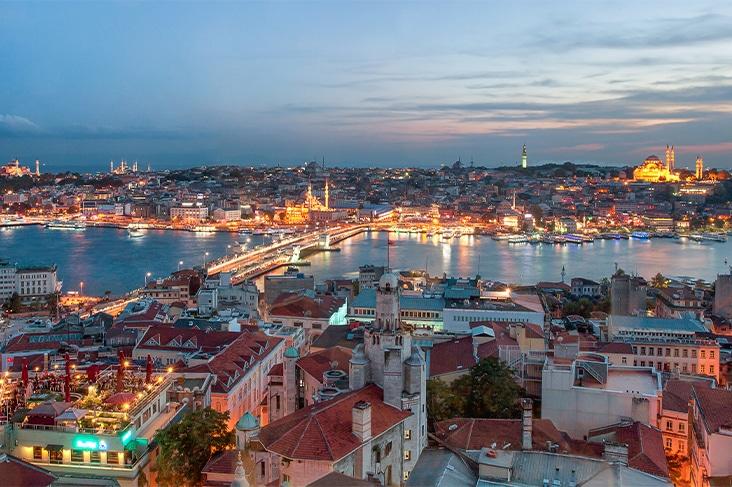
From the buzz of Istanbul to the coves along the Aegean Sea, by way of Cappadocia and its rock formations, Turkey blends culture, landscapes and hospitality. A destination that's close by yet still feels like another world, it appeals as much to fans of vibrant cities as to those passionate about history or nature.
Emergency numbers: who to call in a major emergency
- European emergency number: 112
- Police: 155
- Fire brigade: 110
- Ambulance: 112
- Card Stop (lost or stolen credit cards): +32 78 170 170
- Doc Stop (lost or stolen Belgian ID card or passport): +32 2 488 21 23
Assistance: Redion (Belgium)
In an emergency, contact local emergency services first!
– Want to reach Redion for a medical or technical problem (e.g. a car breakdown)? Do so via the Redion app (downloadable from the Apple Store or Google Play)
– Want to reach Redion for an administrative request or a change to your policy? Do so via the Client Area on the website: https://www.redion.be
How can you travel to Turkey with peace of mind?
What travel documents do you need to visit Turkey?
Before boarding the plane, make sure your paperwork is in order — that's the first key to a stress-free trip. In Turkey, the authorities check not only the validity of the document presented, but sometimes also how much validity remains.
What travel documents do you need for Turkey?
To enter Turkey from Belgium, you'll need either:
- a valid passport; traditionally, this passport must be valid for at least 150 days from your date of arrival, or
- an ID card, if you meet the conditions for entry by card for European citizens.
In addition:
- Belgian travellers don't need a tourist visa for a stay of up to 90 days within any 180-day period.
- Check that the document presented carries a "tourism" residence status, is in good condition, and that the permitted length of stay is respected.
- Some airlines or authorities may ask for a return ticket or proof of a guaranteed place to stay.
For more on entry requirements, check out our dedicated article Turkey: ID card, passport or visa? and find out the specific conditions for Belgian travellers, children and special cases.
What is healthcare like in Turkey?
Turkey's healthcare system is made up of public and private hospitals. Public facilities offer a decent level of care, but private clinics are generally better equipped and have English-speaking staff. They're often preferred by travellers.
However, medical costs can be high for foreign visitors, particularly in the event of hospitalisation, emergency treatment or repatriation. It's therefore strongly recommended to take out travel insurance before you leave, so you're fully covered for care, medication and any unexpected medical costs.
No vaccination is mandatory to enter Turkey. However, it's advisable to check that your basic vaccinations (tetanus, hepatitis A, diphtheria) are up to date.
If you need medical or technical help abroad, Redion can arrange your care or repatriation 24/7. You can choose either a temporary plan or annual insurance, depending on your needs.
How safe is Turkey?
Turkey is generally a safe destination today, but some regions call for extra caution. Since the 2016 coup attempt, stability has returned, even though the political and regional context can still sometimes be sensitive.
Travellers are advised to avoid areas close to the Syrian and Iraqi borders, where isolated incidents can still occur. Travel within European Turkey and major cities such as Istanbul, Izmir or Antalya is considered safe, provided you stay alert in busy areas.
A few simple precautions:
- Keep your valuables out of sight and favour card payments.
- Always make copies of your official documents.
- Avoid large gatherings or political demonstrations.
- When driving, stay alert to traffic, which is often heavy and unpredictable in big cities.
Before you leave, check the travel advice from the Federal Public Service Foreign Affairs and register your trip on travellersonline.diplomatie.be so you can be informed in the event of a crisis or emergency.
Caution is advised in the east and southeast of the country, while the Aegean coast, Cappadocia and Istanbul remain very popular destinations.
What are the driving rules in Turkey?
Driving in Turkey can be a pleasant experience if you stay careful. The country has a well-developed road network, but local driving can be more nerve-wracking than in Western Europe. Staying alert is therefore essential, especially in big cities like Istanbul or Ankara.
Driving licence and assistance cover
With your Belgian driving licence, you can drive in Turkey for one year from your date of entry into the country.
Please note: for vehicles, Redion only covers European Turkey.
Make sure your green card clearly lists Turkey among the countries covered. If in doubt, check directly with your insurer or on your assistance certificate.
Speed limits
- In built-up areas: 50 km/h
- On roads outside built-up areas: 90 km/h
- On motorways: 120 km/h
Speed camera checks are common, and fines can be paid on the spot or when leaving the country.
Practical tips
- Road conditions: generally good, but some rural roads may be in poor condition.
- Car rental: choose recognised agencies and check the insurance terms.
- Fuel and tolls: available on most main roads, often via electronic payment.
- Local driving style: sudden lane changes and frequent honking are part of the scenery. Keep your distance.
In the event of a breakdown or accident in the European part of the country, Redion can arrange your recovery or repatriation to an approved garage within the covered area, provided your policy includes technical assistance in that country.
What can you visit in Turkey depending on the season?
Turkey can be visited all year round, but the country shows very different faces depending on the season and region. From Mediterranean beaches to the Anatolian plateaus, each period has its own charm and advantages.
This country, straddling two continents, is one of the few places offering such cultural diversity: one foot in Europe, the other in Asia, and a thousand-year-old heritage blending Greek, Roman, Byzantine and Ottoman influences. A simple crossing of the Bosphorus is enough to change continent — a perfect symbol of Turkey's richness and blend of cultures.
Turkey in spring (March to May)
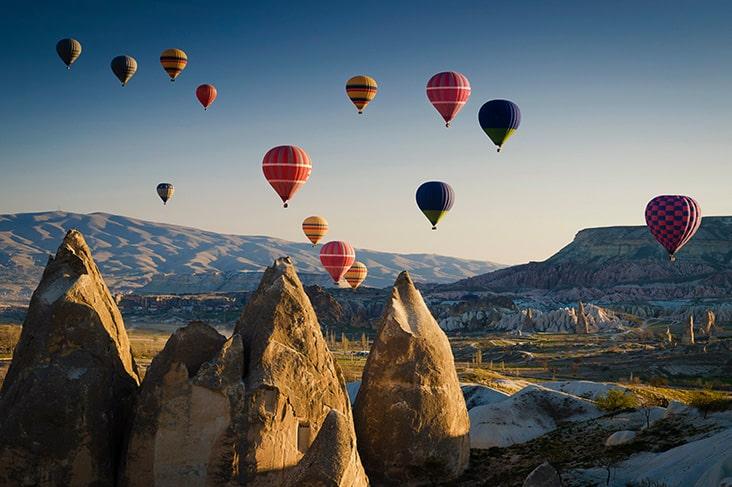 This is the ideal season for exploring Turkey. Temperatures are mild and the landscape is in bloom.
- Istanbul is a pleasure to visit, between the Bosphorus, mosques and bazaars.
- In Cappadocia, the weather is perfect for flying over the valleys by hot-air balloon.
- On the Aegean coast, seaside resorts such as Bodrum or Kuşadası are still quiet and sun-drenched.
Turkey in summer (June to August)
Temperatures rise quickly, especially in the south and inland.
- The beaches of Antalya, Alanya or Fethiye attract fans of the sea and lazing around.
- In the east of the country, this is the best time to go hiking without worrying about the cold.
Bring sun cream and avoid the hottest hours of the day for sightseeing.
Turkey in autumn (September to November)
Autumn is mild, pleasant and well suited to cultural exploration.
- Tourist towns are less crowded, and temperatures are still mild.
- It's also an ideal time to sample Turkish cuisine, particularly during local food festivals.
Turkey in winter (December to February)
Winters can be cold, especially in the east, where snow is common.
- Ski resorts such as Uluđağ or Erciyes offer great opportunities for winter sports fans.
- In Istanbul, the winter atmosphere highlights the historic monuments and traditional cafes.
The climate varies greatly between European Turkey and eastern Anatolia. Before you leave, check the local weather for your itinerary.
Did you know?
The name "Turkey" comes from the Turkish word "Türk", meaning strong, and the Arabic suffix "iyya", evoking the idea of territory or belonging. Together, they form "Türkiye", literally "the land of the strong".
Other practical information about Turkey
- Capital: Ankara
- Language: Turkish
- Currency: Turkish Lira (TRY) – 1 TRY ≈ 0.028 EUR (rate varies). At tourist resorts, euros are often accepted for payments.
- Area: 780,576 km²
- Population: around 87,759,000
- Time zone: UTC +3 (one hour ahead of Belgium in winter).
- Tourism office: goturkiye.com
- Embassy and consulates: turkiye.diplomatie.belgium.be
What are Turkey's culinary specialities?
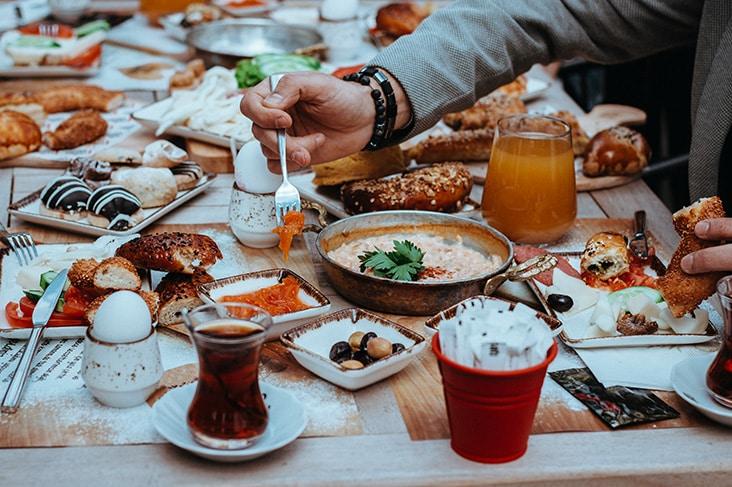 Turkish cuisine is an integral part of the trip. Rich, fragrant and generous, it blends Mediterranean, Middle Eastern and Asian influences. It's impossible to visit Turkey without tasting some of its signature dishes.
The must-tries
- Döner Kebab: probably the most famous, made from lamb or chicken roasted on a spit, served in a sandwich or on a plate with rice.
- Şiş Kebab: skewers of marinated meat, cooked over a wood fire, typical of outdoor meals.
- Köfte: spiced minced-meat meatballs, served with bread or rice.
- Meze: an assortment of cold and hot starters (hummus, grilled aubergine, garlic yoghurt...), often served with flatbread.
- Baklava: a pastry made with filo dough, honey and pistachios, a symbol of Turkish sweetness.
- Kokoreç: a bolder speciality, made from spiced, grilled lamb intestines, very popular on the streets of Istanbul.
Typical drinks
- Çay (black tea): served at any time of day in small tulip-shaped glasses.
- Rakı: an iconic aniseed liqueur, similar to pastis, often drunk during festive meals.
- Ayran: a savoury drink made from yoghurt, water and salt, very refreshing in summer.
Turkish gastronomy reflects the country's hospitality: every meal is an invitation to share, to talk, and to take your time.
A few basic words and phrases
A simple "merhaba" can be enough to build a connection, but here are a few common phrases worth remembering before you leave. Turkish people always appreciate it when a visitor makes the effort to speak a few words of their language — a gesture that's often rewarded with a smile.
- Merhaba: Hello
- İyi akşamlar: Good evening
- İyi geceler: Good night
- Evet: Yes
- Hayır: No
- Teşekkür ederim: Thank you
- Lütfen: Please
- Hesap lütfen: The bill, please
- Afiyet olsun: Enjoy your meal
- Hoşça kal: Goodbye
Travel well insured to Turkey