At a glance
If you're going on a trip to Spain soon, you'll find our information and tips for a hassle-free stay in this short guide.
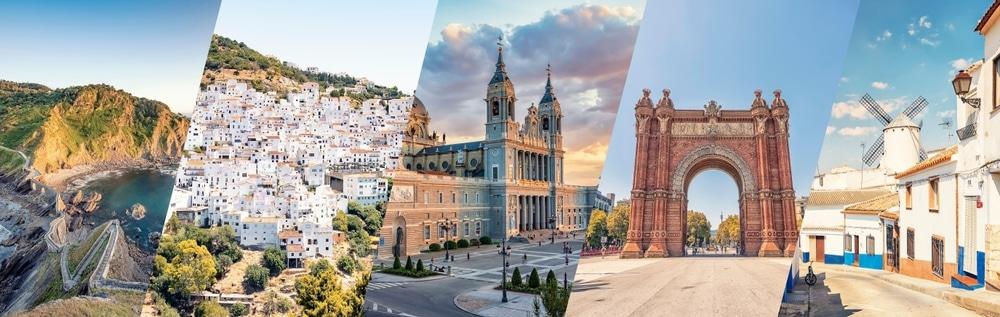
Spain* is one of the most popular tourist destinations in Europe. It lets visitors discover a rich history, majestic monuments and magnificent landscapes, and enjoy a highly varied Mediterranean cuisine.*
In this short guide, we give you a few practical tips to help you prepare well and guarantee a pleasant, hassle-free trip to Spain.
Emergency numbers: who to call in case of a major problem?
- European emergency number: 112
- Ambulance: 061
- National Police: 091
- Municipal Police: 092
- Civil Guard (Guardia Civil): 062
- Fire brigade: 080
- Red Cross emergency number (Cruz Roja): 901 222 222
- Maritime emergency: 900 202 202
- Card Stop (lost or stolen credit cards): +32 78 170 170
- Doc Stop (lost or stolen Belgian ID card or passport): +32 2 488 21 23
Assistance: Redion (Belgium)
In case of an emergency, always contact the local emergency services first!
– Want to reach Redion for a medical or technical problem (e.g. car breakdown)? Do so via the Redion app (downloadable via the Apple Store or Google Play)
– Want to reach Redion for an administrative request or a contract change? Do so via the Customer Area on the website: https://www.redion.be
How to travel safely in Spain?
Good preparation is needed to travel to Spain with complete peace of mind.
That's why we help you below to learn about the administrative steps to take, the road regulations in force, and the country's climate.
What travel documents do you need in Spain?
Like Belgium, Spain is a Member State of the European Union. As a result, if you're an EU citizen, you benefit from free movement to this country.
To travel around Spain, however, you must have your ID card (the Kids-ID for young children) or your passport. These documents must be valid at the time they're presented.
Since 1 October 2024, the Spanish authorities have required hotels, holiday rental accommodation, campsites and car rental companies to submit a large amount of data about their customers, such as their account number, passport or ID details, reason for stay, phone/mobile number, etc.
What is healthcare like in Spain?
If you have a health issue during your trip to Spain, you can get the care you need by visiting a doctor or going to the nearest hospital.
You'll be reimbursed for all or part of your healthcare costs by presenting your European Health Insurance Card, and you'll benefit from optimal cover by taking out supplementary travel insurance. You can choose either a temporary plan or an annual insurance policy, depending on your needs.
How safe is Spain?
Even in the safest countries, small accidents can happen at any time. A few simple measures and precautions will let you enjoy your stay safely.
Here are a few general recommendations:
- always carry a valid ID document (passport, adult or child ID card);
- make a copy of essential documents and keep them in a safe place;
- never carry valuables or large amounts of cash; it's best to have only a small amount on you and keep the rest in a secure safe (at the hotel);
- be careful when paying with a bank card or withdrawing money;
- always be cautious on the road and at rest areas, as well as when driving at night;
- if you're driving on motorways, only stop at designated rest areas.
Spain is a safe destination. However, like any major tourist destination, cases of (bag) snatching can occur, especially in streets or busy areas. Always keep an eye on your belongings, wherever you are. In a car, avoid leaving your personal items in plain sight.
To prevent bank card fraud, stay vigilant when making purchases. In particular, avoid ATMs located in isolated or quiet areas. Always pay for your purchases yourself, without handing your payment card to others. Don't share any personal information with third parties.
It's always wise to check the current security measures provided by the Belgian Federal Foreign Affairs Department. Terrorist alerts and demonstrations are reported there, and the information is updated regularly.
What are the driving rules in Spain?
From Belgium, it's easy to get to Spain by plane, train or car.
Spain has a large number of airports near its major cities. The rail network is also very extensive. The advantage of the train is that you arrive directly in the heart of the city you want to visit. Major cities generally have a well-developed metro or public transport network. Travel between cities and regions can easily be done by train (railway station) or bus (bus station).
Many tourists decide to travel to Spain by car or rent a vehicle there. Here are the road rules in force:
Speed limits
- in built-up areas: 50 km/h;
- on conventional roads: 90 km/h;
- on expressways and motorways: 120 km/h.
- follow the road signs installed along the way, as they may indicate other values.
Note that car rental is reserved for those over 21.
Visit this site if you'd like more information on driving standards in Spain.
Mandatory equipment
Click here to discover all the useful information on mandatory equipment via a downloadable application from the European Commission.
Electric cars
Like most European countries, Spain is increasingly equipping itself with charging points for electric vehicles. Plan your route carefully if you're driving an electric vehicle, and bear in mind that during the high tourist season, it's not always easy to immediately find a free charging point in busy areas.
Several websites let you locate charging points, including this one: https://blog.chargemap.com/fr
What can you visit in Spain depending on the season?
Spain has a Mediterranean climate, hot in summer and mild in winter. Nevertheless, the different regions are subject to varied weather conditions:
- The central plateau has a continental, arid climate: cold in winter and very hot in summer.
- The Andalusian plain is characterised by mild temperatures in winter and very high temperatures in summer.
- Northern and north-western Spain have a cool, humid climate.
- The coastal regions of the east and south are subject to Mediterranean-type climate conditions: mild in winter and sunny in summer. The same goes for the islands (Balearic, Canary).
- In the Pyrenees, the mountain climate leads to temperatures that vary depending on altitude.
The choice of the ideal season depends on your destination and your favourite activities. To enjoy visiting the centre, go in spring or autumn. The Easter period is known for its various processions in different places. On the other hand, winter or the shoulder season is the ideal time if you're planning a holiday on the coasts in the south of the country. Summer is the perfect time if you're planning to stay in the north.
Did you know?
Spain is home to "the oldest restaurant still open in the world": Casa Botín, founded in 1725. According to the Guinness Book of Records, this establishment located in Madrid has never stopped operating since it opened.
Other practical information about Spain
- Capital: Madrid
- Language: Spanish, Catalan, other local languages
- Currency: euro
- Area: 505,911 km2 (including islands)
- Population: 48.5 million
- Tourist Office: https://www.spain.info
- Embassy and consulates: https://spain.diplomatie.belgium.be/fr/ambassade-et-consulats/
What are Spain's culinary specialities?**
Spanish cuisine is rich, creative, tasty and healthy all at once. It inspired the "Mediterranean diet". This is a type of diet based on eating fresh seasonal fruit, legumes, vegetables and olive oil. The latter is, incidentally, among the most popular high-end gourmet products in the country, along with Iberian ham (jamón serrano).
Make the most of your stay to sample iconic culinary specialities such as tapas, paella, sangria, gazpacho, serrano ham, tortilla… Most of these traditional preparations come in various must-try local variants. Coastal regions are renowned for their fish, seafood (including squid) or shellfish dishes.
Spain also has a large number of cheeses and, like other Mediterranean countries, is renowned for its excellent wines.
Your discovery of Spain can therefore easily become a trip full of tastings and delicious culinary discoveries!
What are the different types of accommodation in Spain?
Besides classic hotels, paradores are among the types of accommodation available in Spain. These historic monuments converted into luxury hotels are known for their charm, authenticity and comfort.
Looking for a friendly atmosphere? Go for campsites or holiday villages, which offer a relaxing stay with activities for the whole family.
If you prefer the atmosphere of guesthouses or cheaper hotels, look into hostales, small hotels run by resident owners.
Posadas, modern versions of country inns, are also synonymous with warmth and contact with locals. This type of accommodation is mainly found in small Spanish towns.
A few basic words and expressions
- Buenos días – Good morning
- Buenas tardes – Good afternoon
- Buenas noches – Good night
- Hola – Hello / Hi
- Adiós – Goodbye
- Por favor – Please
- Gracias – Thank you very much
- ¿Dónde está…, por favor? – Where is…, please?
- ¿Cuánto cuesta, por favor? – How much does it cost, please?
- (Yo) entiendo, / Lo siento, (yo) no comprendo – I understand / I'm sorry, I don't understand
- De nada – You're welcome
- ¿Dónde están los servicios, por favor? – Where are the toilets, please?
- La carta por favor – The menu, please
- La cuenta, por favor – The bill, please