At a glance
New personal mobility devices are increasingly common in our cities. Discover our tips for getting around safely.
In 2017, Vias published the results of a study it conducted in collaboration with AG Insurance on the use of new personal mobility devices. It revealed some interesting findings and around ten tips for making the use of such a device as safe as possible on public roads.
What is a new personal mobility device?
"Personal mobility devices" are vehicles that belong to the group of slow vehicles. They are treated in the same way as pedestrians and cyclists.
There are two types of personal mobility devices:
Non-motorised personal mobility devices:
any vehicle powered by muscular energy and not fitted with a motor. Examples include skates, roller skates, scooters, skateboards, wheelchairs, etc.
Motorised personal mobility devices:
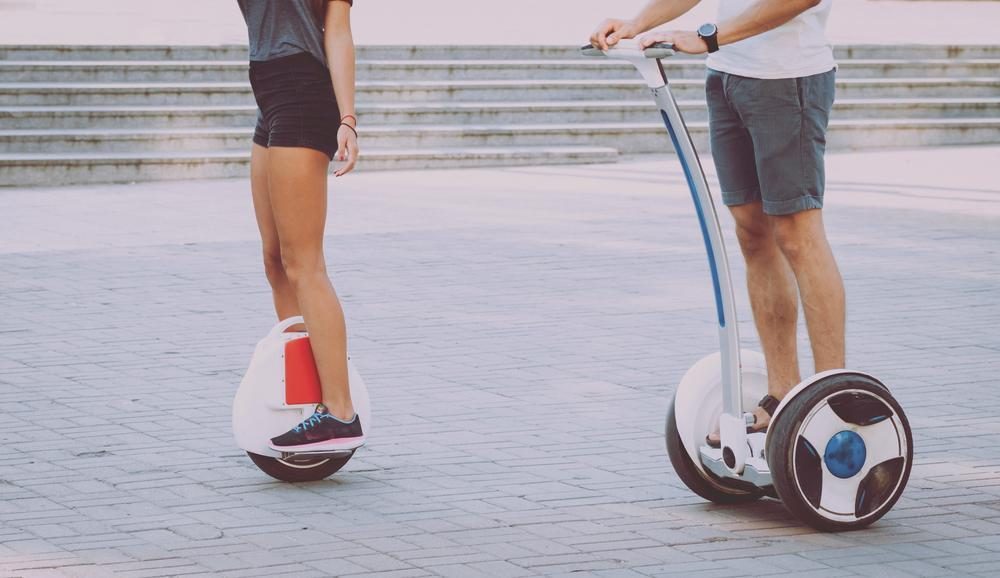
any motorised vehicle with two or more wheels with a maximum speed of 18 km/h. This includes electric wheelchairs, segways, electric scooters, etc.
10 tips for using a personal mobility device safely
-
Choose a device bearing the CE mark, offering a two-year warranty (mandatory in Europe).
-
For your safety, stick to the 18 km/h speed limit.
-
Wear protective gear: knee pads, helmet.
-
Practise in a place with no traffic, preferably with someone accompanying you.
-
Don't hesitate to take a course to learn the basics, especially if you're riding a unicycle.
-
Do not let children under 10 use a personal mobility device on public roads unaccompanied.
-
Respect the minimum and maximum weight for the user.
-
Wear reflective clothing, and as soon as light levels drop, fit a small white light at the front and a red light at the rear.
-
Don't ride on a pavement if your speed is faster than walking pace. When using the pavement, remain courteous towards pedestrians.
-
Uneven road surfaces can be dangerous. Avoid surprises and be especially careful, particularly on unfamiliar terrain.
Increasingly common in our cities
 Personal mobility devices are increasingly popular in cities. They are used not only for leisure, but also for commuting to work or school. The hoverboard is used more for leisure activities.
On average, a user of such a device spends around 3 to 6 hours a week on it (covering about 50 to 90 km a week).
Is insurance necessary?
Motorised personal mobility devices are treated in the same way as motor vehicles and must therefore be covered by third-party liability insurance covering damage to third parties.
However, many users are not insured.
Insuring your personal mobility device against damage and/or theft is certainly no luxury either, given that the purchase price of some devices is well over €1,000.
Enthusiastic users
The study found that users saw their mobility device as a very useful and alternative means of transport.
Their biggest frustration, however, is poor road infrastructure (pavements that are too high, uneven roads, poor surfacing, etc.).
What about other road users?
Other road users (especially pedestrians) have very mixed feelings. A third say they don't feel comfortable when they encounter someone on such a device. The fact is that only personal mobility devices travelling at walking pace are permitted on pavements, a rule that unfortunately isn't followed by all users!
Useful links:
https://www.belgium.be/fr/mobilite/autres_vehicules/engins_de_deplacement
Also read: