At a glance
How do you choose your ski resort? Are the slopes suited to your level? What budget should you plan for? Our blogger Sam investigates...
What's the best way to get to your ski resort? Are the slopes suited to your level? Are there activities besides skiing or snowboarding? What budget should you plan for? ...
Below, our blogger Sam from checkoutsam looks at a few basic questions you might ask yourself when choosing a winter sports resort.
1. What means of transport will I use to get to the ski resort?
We're lucky, because Belgium is located in the centre of Europe, so you don't need to travel too far to reach a lovely winter sports resort in the Alps or elsewhere.
By car
The most popular option is to travel by car. This is especially handy if you're going on holiday with a large group or with your family, or if you're bringing your own winter sports gear. A roof box can also come in useful.
Five hours on the road will get you to several winter sports resorts in Germany (Winterberg) or France (the Vosges), and if you don't mind driving a bit further, many ski resorts in France or Switzerland are just a few hours further by car. For Austria, allow at least ten hours, and for Italy, eleven to twelve hours.
However, keep in mind the busiest days on the road and weather conditions, and make sure you have the necessary equipment (snow chains, winter tyres...).
By train
I generally prefer the comfort of the train. Several high-speed trains leave daily from Brussels-South to France. This option is affordable and you don't have to pay extra for luggage.
Depending on the ski resort, you may need to change trains once or twice before arriving at a village or town near your final destination.
Shuttles are very often available to take you to your destination. Otherwise, you still have the option of a taxi or another means of transport (public transport or car rental).
By plane
Flying isn't exactly the most eco-friendly option, but it's certainly the fastest.
From Brussels, daily flights serve practically every ski region in Europe.
Geneva, for example, is the ideal gateway for winter sports in the French or Swiss Alps, while Milan or Venice are ideal for skiing in the Italian or Austrian Tyrol. Innsbruck is also close to the resorts of the Austrian Alps.
But don't lose sight of the fact that flying can be expensive if you want to bring your own ski equipment!
2. What's my budget?
Skiing or snowboarding isn't a cheap activity. But it's entirely possible to enjoy winter sports without spending too much!
Besides the cost of transport to and from the ski resort, you'll of course also need to arrange your accommodation. Also think about costs such as ski passes and ski equipment. A smaller ski resort will usually have cheaper ski passes, but on the other hand, the slopes will be less varied (though probably enough for beginner skiers).
To reduce the total price, you can also look for an apartment where you cook for yourself. In every ski resort, you'll find supermarkets or convenience stores offering enough choice to prepare delicious meals.
Another way to keep costs down (especially for accommodation and ski passes) is to stay outside peak season.
Tip: look for as much information as possible about the ski resort and the cost of accommodation and facilities online or from a specialist travel agency.
3. Is the ski resort too crowded or too expensive?
Winter sports resorts are particularly busy at certain times of the year, which sometimes leads to (huge) price increases. What's more, crowds make skiing or snowboarding less enjoyable. So if you have the option, it's really advisable to choose the low season.
In principle, there are several "peak seasons" to keep in mind. They generally coincide with school holidays in Belgium and neighbouring countries. Peak season therefore falls around the Christmas holidays (two weeks, from late December to early January), from mid-February to mid-March (spring break in the Netherlands and Belgium) and the Easter holidays in April.
School holidays in Germany, the Netherlands, France, Austria and Italy generally coincide with our own holiday periods.
High-altitude ski resorts (1,800m+) offer snow cover from late November/early December to late April/early May.
4. What are the slopes like at the ski resort?
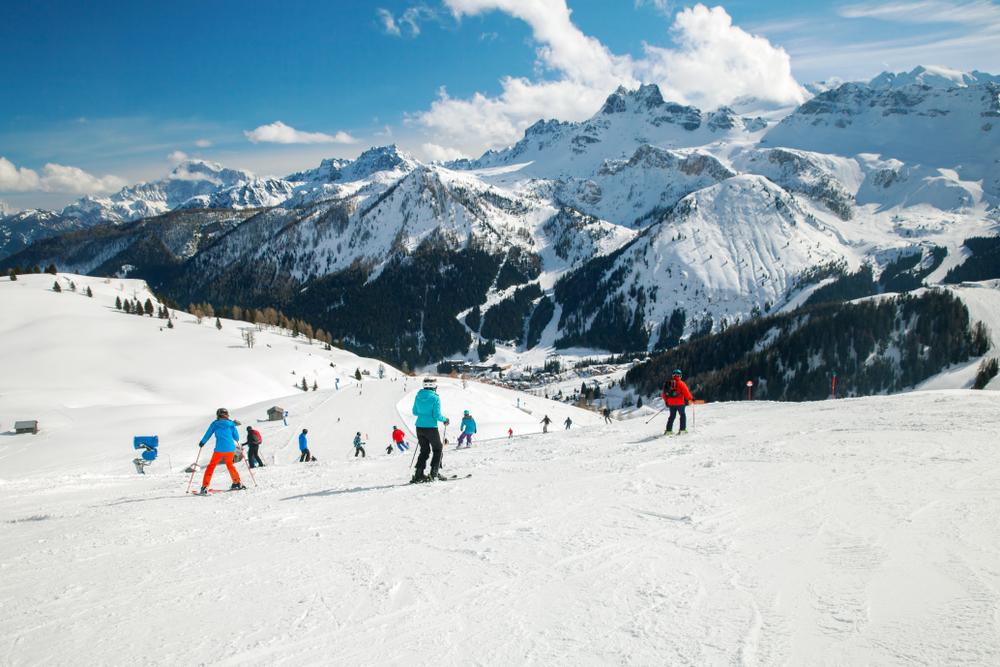
Are you a beginner or an experienced skier? If you're a good skier or snowboarder, you'll obviously be looking for a challenging and varied route. Find out in advance how many kilometres of slopes the area has and how varied they are.
Sometimes, different ski areas work together to form one giant area. In France, Les Trois Vallées (four different ski villages) is the largest, with more than 600 kilometres of slopes, followed by the Portes du Soleil ski area (six ski villages, one of which is even in Switzerland) with 580 kilometres.
As a beginner skier or snowboarder, you obviously don't need that much choice. A more modest resort will let you save money.
The difficulty level of a slope is indicated by colours. Depending on your level, it's best to choose an "easy" or "difficult" colour.
"White" slopes are for true beginners. Ideal if you've never skied before.
"Green" slopes are very easy and flat, ideal for learning to turn.
"Blue" slopes are intended for people who already know how to ski or snowboard and have a medium difficulty level. They're perfect for recreational snow sports.
Then there are "red" slopes. These slopes are already a bit steeper or more complicated (with lots of bumps, for example).
And finally, for the more experienced, there are "black" slopes. They're often very steep and require good technique.
That said, don't always rely solely on these colours. I've often found that a given colour was much easier or much harder compared to the same colour elsewhere. It's just a recommendation that generally matches your level of expertise.
Another tip: check whether the snow is good quality. Turning is most enjoyable in powder snow, but that requires regular fresh snowfall. A high-altitude area will make this easier.
If it doesn't snow for a long period (or if temperatures are too high), the snow quality will be poor and dangerous.
5. Am I guaranteed to have snow?
It's clear that ski resorts located in lower-altitude areas don't always offer the same level of snow guarantee. So check this before you leave.
High-altitude areas have a longer-lasting snow guarantee. It can therefore be worth booking there off-season (at a reduced rate) and still enjoying a good level of snow cover.
6. Are there other activities besides skiing or snowboarding?
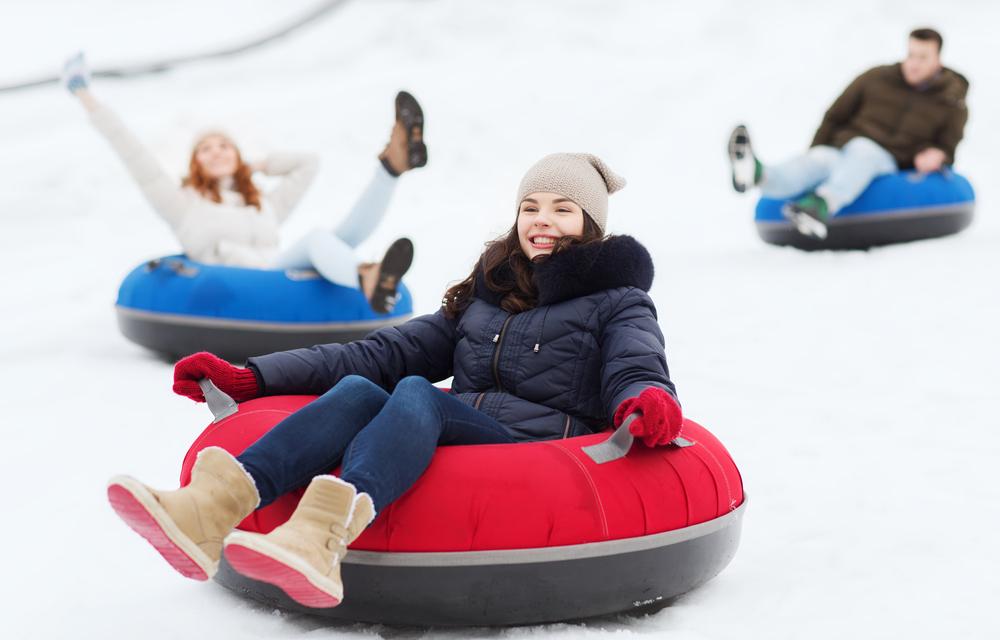
Do you enjoy skiing or snowboarding, but one or two days of skiing is enough for you? In that case, it's worth finding out about the other activities on offer at the resort. These other activities will also come in handy if you're travelling with children or with less experienced winter sports enthusiasts.
Many ski resorts in Europe offer plenty of activities besides skiing or snowboarding. I'm thinking of sledding with huskies or reindeer, guided sleigh rides, snowshoeing, cross-country skiing, ice climbing, biathlon, fat biking...
Either way, plan for suitable outfits. Good walking boots (waterproof and snow-resistant!) and breathable but warm clothing are strongly recommended.
Most ski areas also offer indoor activities (wellness centre, museums, bowling, visits to cheese dairies or wine estates...).
Read our other article on the topic by clicking here.
If you're really looking for special activities, I can recommend "Savoie Mont Blanc". I went there myself for a week to experience winter sports "differently", and it was great!
7. What's the nightlife like at my ski resort?
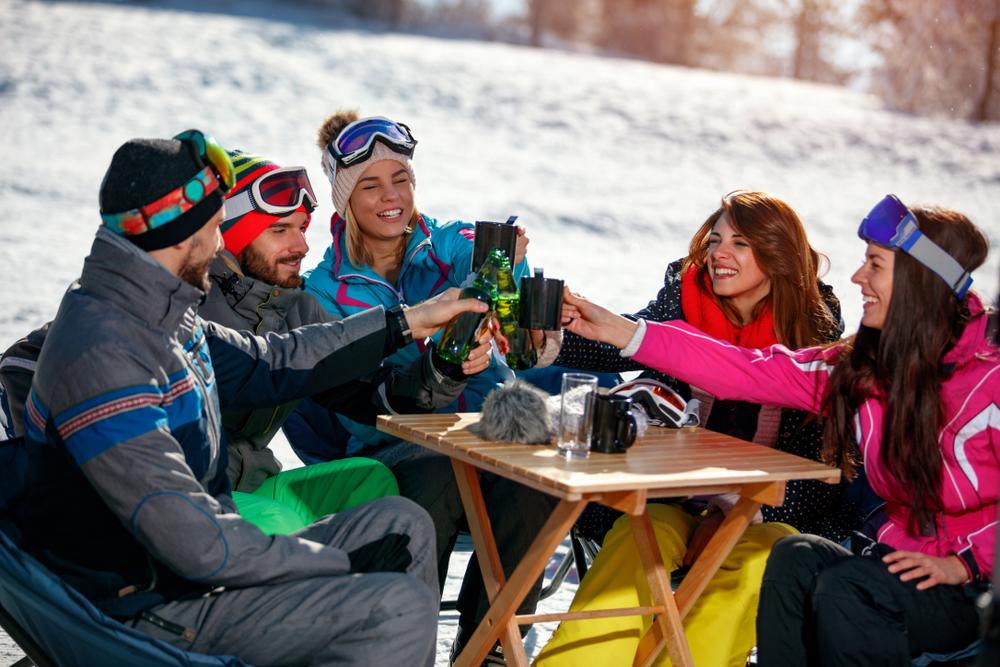
Are you looking for a winter sports resort with après-ski, or do you also want to go out in the evening? In that case, a small ski resort may not be so appealing to you.
In most areas, you'll always find a few bars or pubs, but if you're more of a "partying sports enthusiast", I recommend heading to Ischgl, Sölden and Obertauern (Austria), Kronplatz (Italy) or Val Thorens (France).
But be warned: these places are expensive, and so is their nightlife.
8. Eat out or cook yourself?
Food lovers can head off on their ski holiday with peace of mind. In almost every winter sports area, you'll find a wide range of restaurants, from small fast-food spots to fine dining. The cost obviously depends on what type of dining you choose.
Larger winter sports resorts naturally offer more choice and options, while smaller resorts usually serve more traditional dishes.
If you don't want to spend too much in restaurants, the trick is to cook for yourself. You'll find several supermarkets or convenience stores in the villages. But you'll obviously need accommodation with a kitchen or kitchenette.
In any case, let yourself be tempted by local specialities. Cheese and wine lovers will certainly have a field day.
9. What about Covid and health rules?
At the start of the pandemic crisis, the coronavirus forced ski resorts to stay closed, but that apparently won't be the case during the 2021-2022 ski season, and hopefully not in the years that follow.
However, since health rules keep changing, it's hard to give a reliable overview. So always check what rules apply in your destination country and keep yourself regularly updated. You can do this by checking the websites of official bodies, embassies or ski resorts.
10. Am I sufficiently insured?
Travelling doesn't just require good preparation. It's also important to be properly insured, because you never know what medical issues you might run into on site. Accidents happen very quickly when skiing or snowboarding: an unlucky fall, a collision with another skier, a wrong movement leading to a torn ligament, and so on.
So be careful and take out good travel insurance.
In conclusion…
I hope this article has helped you make an informed choice for your next winter sports resort.
You'll find more inspiration or information about almost every ski area on specialist websites. You can also read reviews of winter sports resorts there and get more information about local snow conditions.
I wish you lots of fun on the slopes!
About "Check Out Sam"
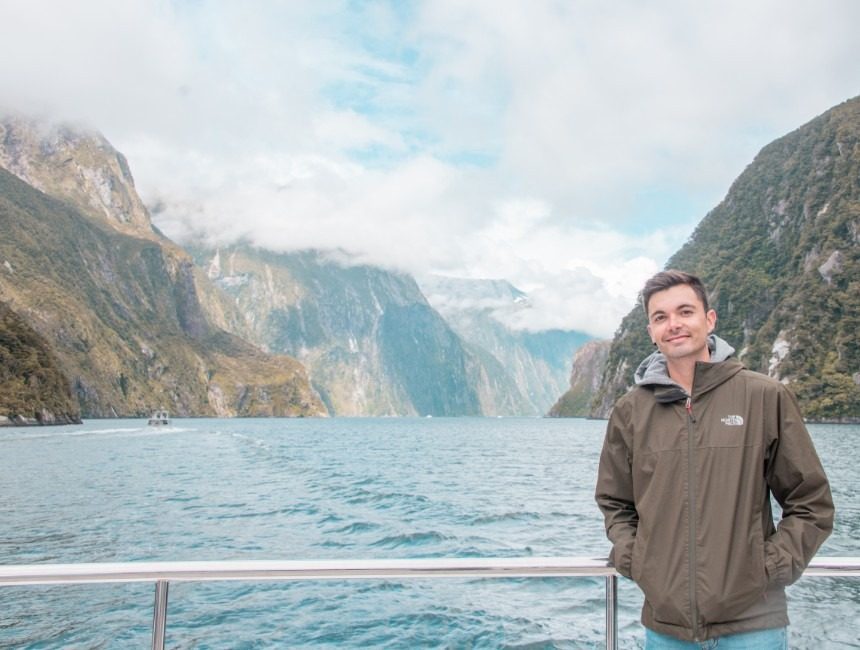
Sam is a globetrotter at heart. Since the age of 18, he's been travelling the continents as a true "digital nomad". Sometimes he just stays put, but he never stays idle for long. Wherever he goes, he gathers information which he writes up on his blog as practical travel guides: places to visit, useful tips, original places to stay and, of course, wonderful travel stories with beautiful photos. To find the inspiration and information you're missing, just head over to Check Out Sam!