At a glance
Does your child cycle to school, alone or accompanied?\ What points should you pay attention to for a safe journey?
Does your child cycle to school, alone or accompanied?
What points should you pay attention to for a safe journey?
According to the Vias Institute, in 2017, every day (!) around ten children under 15 were the victim of a road accident. And this figure keeps rising, as cycling becomes more and more popular.
A few rules for cycling to school safely
1. Choose the right bike
- Choose a bike that matches your child's size. Too often, children ride a bike that is too small or too big for them. This makes riding not only uncomfortable, but also dangerous. Your child will grow during the school year: take this into account when buying the bike.
- When buying: consider the weight, sturdiness, accessories, ease of adjusting the saddle, and safety of the bicycle.
- Make sure the bike is equipped with all the safety accessories: lights, reflectors, a bell, flashing lamps... and that the chain and brakes are in good condition. Some bikes have a small flag that can be deployed sideways at the back: it encourages drivers to keep a safe distance when passing the bike.
2. Equip your child properly
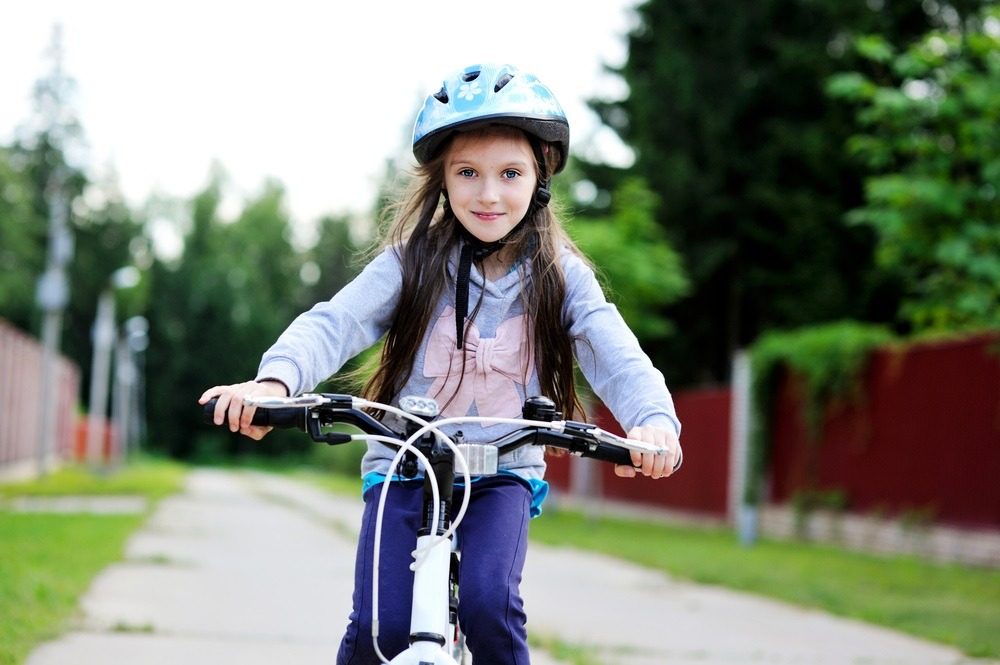
- Provide your child with a helmet that fits their head well. To protect them in a fall, you can also equip them with gloves, knee pads or elbow pads.
- Your child must be seen! Have them wear reflective clothing, or possibly a reflective armband or belt, and put a fluorescent vest on them.
3. Before setting off
- Check that the bike is working properly (including the brakes and tyre pressure). Have it serviced regularly.
- Adjust the saddle position correctly. Your child must be able to reach the pedals easily and must be able to put a foot on the ground without unbalancing the bike.
- Make sure the child wears their schoolbag preferably on their back, or otherwise securely strapped to the luggage rack. Never hang the schoolbag on the handlebars, as it could unbalance the bike.
4. The route
- Choose a route that offers the greatest safety (with cycle paths, roads where car speed is limited, roads that are not too busy — especially by heavy goods vehicles — and avoid dangerous crossings and junctions, which are best crossed on foot!). Sometimes this "ideal" route is not the shortest one from home to school!
- Test the route in real conditions with your child before sending them out alone.
- Make your child aware of accidents caused by the blind spots of cars, buses and trucks.
- Find out whether other children follow the same route by bike: riding in a group offers greater safety in terms of visibility and help in case of a problem.
- Weather conditions change throughout the year with the seasons: plan an alternative means of transport if conditions no longer guarantee a safe journey (storms, heavy rain, ice, snow...).
- Provide a anti-theft security system (e.g. a lock) and find out where your child can park their bike at school.
5. If you accompany your child by bike
- If your child has little experience, it is better to accompany them to school. Ride on their left if possible, to shield them from traffic passing close by. Otherwise, ride behind them so you can keep an eye on them and anticipate dangers.
- While riding, your child must obey your instructions, such as "Stop", "Slow down", "Stay on your side", "Watch out for the pedestrian", etc.
- Follow the traffic rules yourself, so as to set an example for your child.
- Good to know: if they are under 9 years old and use a bike with wheels no more than 50 cm in diameter, your child is allowed to ride on the pavement.
6. If your child sets off alone by bike
- Only consider this option if your child is sufficiently seasoned and experienced to go out alone. They must know the dangers well, be able to assess risks (drivers' speed, right-of-way rules...) and properly follow the rules of the road (signalling a turn with their arm, looking behind them during a manoeuvre without losing their balance, making sure the driver has seen them, anticipating, etc.).
- Give them a way to warn you in case of a problem (a mobile phone, or spots along the route where your child can call you if needed). Slip your contact details into the child's schoolbag or wallet. You might also ask the child to text you when they arrive.
Useful link: https://www.vias.be/fr/newsroom/chaque-jour-10-enfants-sont-blesses-dans-un-accident-de-la-route/
.\
First published: 09/2015 - Updated: 08/2022