At a glance
If you're going on a trip to Greece soon, you'll find information and tips for a hassle-free stay in our short guide.
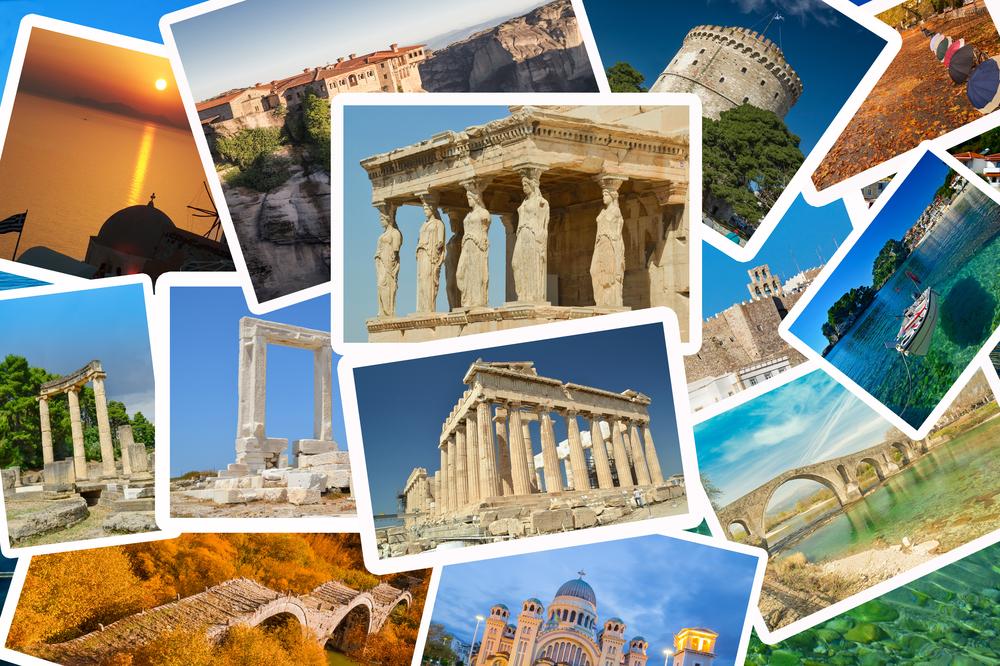
The treasures and remains of ancient cities, the lush green landscapes of Greek Macedonia, the rich history of the Peloponnese, the idyllic islands of the Cyclades… Greece has everything you need for an unforgettable stay.
However, good preparation is needed to travel with complete peace of mind. Discover below the practical information you need to organise a hassle-free stay.
Emergency numbers: who to call in case of a major problem?
- European emergency number: 112
- Police: 100
- Ambulance: 166
- Fire brigade: 199
- Card Stop (lost or stolen credit cards): +32 78 170 170
- Doc Stop (lost or stolen Belgian ID card or passport): +32 2 488 21 23
Assistance: Redion (Belgium)
In case of an emergency, always contact the local emergency services first!
– Want to reach Redion for a medical or technical problem (e.g. car breakdown)? Do so via the Redion app (downloadable via the Apple Store or Google Play)
– Want to reach Redion for an administrative request or a contract change? Do so via the Customer Area on the website: https://www.redion.be
How to travel worry-free in Greece?
Find out about the essential documents, the healthcare system, safety, transport and climate to properly prepare your trip to Greece. We give you some useful information.
What travel documents do you need in Greece?
Like Belgium, Greece is a Member State of the European Union. As a result, if you're an EU citizen, you benefit from free movement to this country.
To travel around Greece, however, you must have your ID card (the Kids-ID for young children) or your passport. These documents must be valid at the time they're presented.
What is healthcare like in Greece?
If you have a health issue during your trip to Greece, you can get the care you need by visiting a doctor or going to the nearest hospital. Communication may not always be easy if you don't speak Greek, but a large number of healthcare staff speak English (and sometimes French).
You'll be reimbursed for all or part of your healthcare costs by presenting your European Health Insurance Card, and you'll benefit from optimal cover by taking out supplementary travel insurance. You can choose either a temporary plan or an annual insurance policy, depending on your needs.
How safe is Greece?
Wherever you are, small accidents can happen at any time. A few simple measures and precautions will let you enjoy your stay safely.
Here are a few general recommendations:
- always carry a valid ID document (passport, adult or child ID card);
- make a copy of essential documents and keep them in a safe place;
- never carry valuables or large amounts of cash; it's best to have only a small amount on you and keep the rest in a secure safe (at the hotel);
- be careful when paying with a bank card or withdrawing money;
- always be cautious on the road and at rest areas, as well as when driving at night;
- if you're driving on motorways, only stop at designated rest areas.
Greece is a safe destination. However, like any major tourist destination, cases of (bag) snatching can occur, especially in streets or busy areas. Always keep an eye on your belongings, wherever you are. In a car, avoid leaving your personal items in plain sight.
To prevent bank card fraud, stay vigilant when making purchases. In particular, avoid ATMs located in isolated or quiet areas. Always pay for your purchases yourself, without handing your payment card to others. Don't share any personal information with third parties.
It's always wise to check the current security measures provided by the Belgian Federal Foreign Affairs Department.
What are the driving rules in Greece?
From Belgium, it's easy to get to Greece by plane.
Greece has a large number of airports near its major cities.
Many tourists decide to travel to Greece by plane and rent a vehicle there.
Generally, roads are well maintained and fairly wide, even in the mountains. However, caution is still advised for less experienced drivers and/or when driving through narrow, steep areas. Reduce your speed accordingly.
Be on your guard, because although it's prohibited under the Highway Code, the strip on the right of the road, similar to a motorway hard shoulder, is often used as a full traffic lane. It's mainly used by people who want to take their time to admire the scenery.
Always wear a helmet if you're riding a motorbike, moped, bicycle, scooter, etc.
In urban areas, don't leave your car in an unsupervised spot. Don't carry overly conspicuous valuables. Keep your travel documents safe.
In case of a fine, ask for a translation of the meaning and scope of the alleged offence before signing any document written in Greek.
We also advise you to stick to national roads, especially near the Bulgaria-Turkey border, if you want to visit Thrace. Special access permits may be required.
Here are the road rules in force:
Speed limits
- in built-up areas: 50 km/h (sometimes 30 km/h);
- outside built-up areas: 70 to 90 km/h, depending on signage;
- on expressways: 110 km/h;
- on motorways: 130 km/h (110 km/h in rainy weather).
- follow the road signs installed along the way, as they may indicate other values.
Tolls
Only two motorways are tolled: the one connecting Athens to the Peloponnese peninsula, and the one connecting it to the city of Thessaloniki.
Mandatory equipment
Click here to discover all the useful information on mandatory equipment via a downloadable application from the European Commission.
What to visit in Greece depending on the season?
Greece has a Mediterranean climate, hot in summer and mild in winter. Nevertheless, the different regions are subject to varied weather conditions:
In winter, temperatures can drop on average to 12°C in Crete, 5.5°C in Thessaloniki, and 9°C in Athens. In Athens, snow can fall during brief cold spells.
In spring, pleasant sunshine covers most of the country. However, storms can break out in the afternoon in May.
In summer, it's regularly warm and sunny. In the major cities, the heat is intense. On the islands and coast, however, it's tempered by sea breezes.
Greek autumn offers summer-like weather, especially in the northern part of the country and on the islands. The rainy season generally begins in October.
Sub-climates in Greece
Greece's climate is divided into several sub-climates depending on the region:
In the Aegean Sea, summer is very hot, while winter is rainy but mild. Although the meltemi (prevailing wind) lowers the temperature, it can also make the sea dangerous by creating strong swells.
The west coast is the wettest area, with a cool winter.
Summer is extremely hot on the east coast and the mainland. With a dry winter, this part of the country is the least rainy.
Northern and central Greece have the coldest, driest winter, to the point that snow and frost form.
The best times to visit this country are therefore May or the September-October period, as you'll generally enjoy a pleasant temperature and less rain. That said, the choice is yours if you'd like to visit Greece at any other time of year.
Did you know?
The white houses found on the Greek islands, with their blue doors and windows, recall the country's national colours, but not only that. According to tradition, the colour blue refers to the colour of the sky and the sea.
White reflects the hot rays of the sun, keeping the inside of the rooms cool.
Other practical information about Greece
- Capital: Athens
- Language: Greek
- Currency: euro
- Religion: Orthodox Christianity (98%)
- Total area: 131,957 km2
- Population: 10.4 million
- Tourist Office: visitgreece.gr
- Embassy and consulates: https://grece.diplomatie.belgium.be/fr/ambassade-et-consulats/
What are Greece's culinary specialities?
Greek cuisine stands out thanks to the quality ingredients it uses, sourced from local producers. Among the country's specialities is feta. This curd cheese can be added to all kinds of dishes. It can also be baked in the oven if you want to pair it with slices of toasted bread.
Go even further and let yourself be tempted by the country's culinary specialities, including:
- tzatziki (a yoghurt and cucumber cream with plenty of garlic);
- Greek salad (a salad made of various vegetables drizzled with olive oil);
- moussaka (layers of minced meat, sliced aubergine and tomato slices, topped with béchamel sauce);
- meze (a Mediterranean meal similar to Spanish tapas and Italian antipasti).
Vegetarians aren't left out either, with various recipes: fava santorini (a Santorini split pea spread), revithosalata (hummus), spanakorizo (spinach rice)…
Greece is also known for its regional wines, the most famous of which is undoubtedly Retsina, a resinated wine whose origins go back to time immemorial.
Your discovery of Greece can therefore easily become a trip full of tastings and delicious culinary discoveries!
A few basic words and expressions (transcriptions)
- Kaliméra: hello
- Kalí̱ sas méra!: have a good day
- Kalispéra: good evening
- Ta leme: goodbye
- Signómi: sorry
- Signómi / parakaló: excuse me / please
- Né: yes
- Óchi: no
- Efkharîsto (polí): thank you (very much)
- Parakaló: you're welcome
- Katalavéno / den katalavéno: I understand / I don't understand
- Eínai to póso: how much does it cost?
- To logariasmó, parakaló̱!: the bill, please!
- Poú eínai oi toualétes?: where are the toilets?