At a glance
What does a travel first-aid kit include? Why is it useful to pack one when traveling?
Are you leaving on a trip soon?
Don't forget to pack your travel first-aid kit, and check it before you leave.
Why check your travel first-aid kit?
Before setting off on a long (far-away) trip, it's essential to prepare and check your travel first-aid kit. Here are the main reasons why:
- Being able to react quickly in case of a minor medical problem.
- Anticipating the specific needs of the trip (depending on the destination, health risks, planned activities, length of stay...).
- Making sure your medicines are valid and available: not all medicines are available everywhere. Only bring medicines that are authorized in the destination country, and if you're importing medication, plan for a medical certificate in French and/or English.
Below, we give you a short checklist of items to bring, along with a few useful tips so you don't overlook anything.
The "Travel First-Aid Kit" checklist
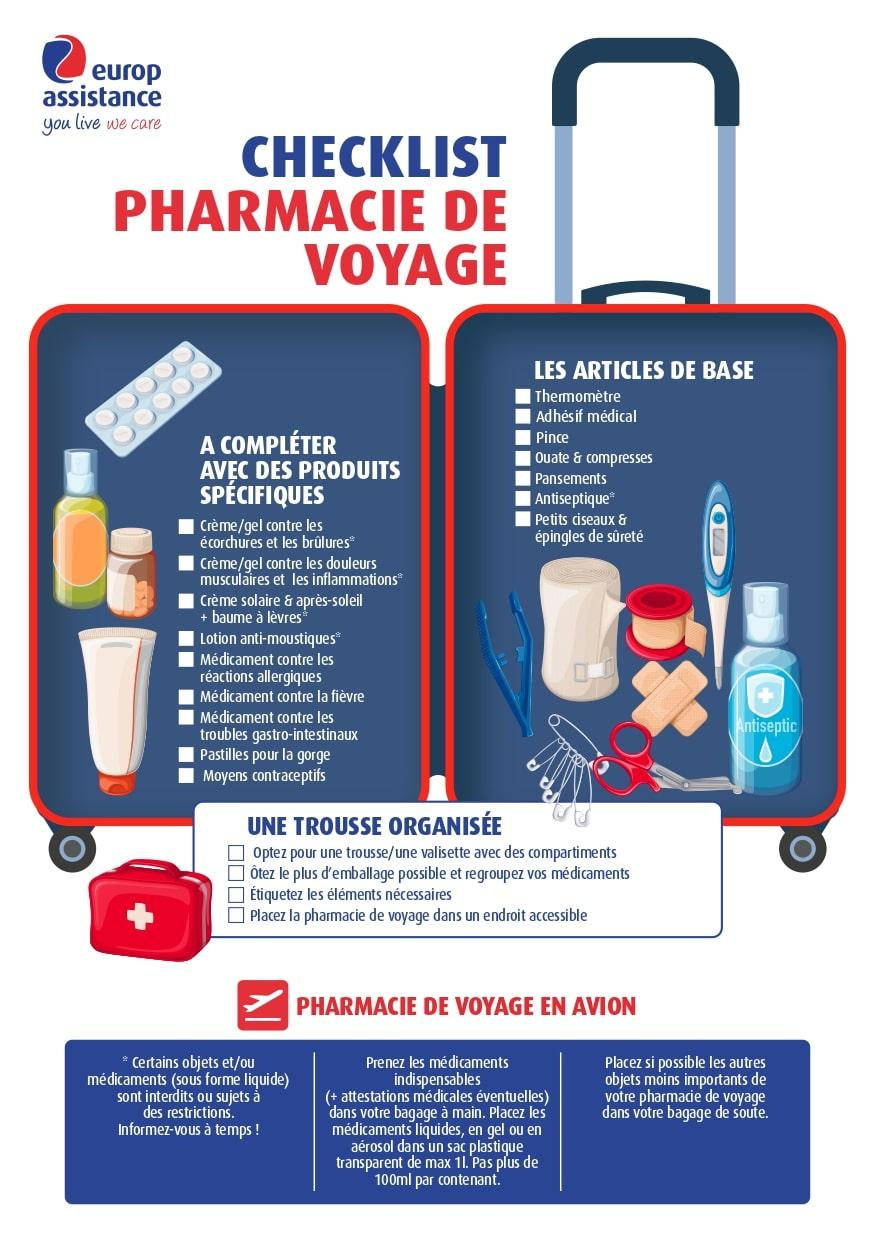
Click here for the printable version
What to put in your travel first-aid kit
- The medicines you normally take. Bring a small extra supply.
- A disinfectant product.
- Sterile compresses, adhesive tape, elastic bandages, tweezers, small scissors, a thermometer, cotton swabs, cotton wool, a small mirror.
- Painkillers and fever medication.
- A sunscreen with a high protection factor, and a moisturizing cream.
- Antihistamines and anti-diarrhea medication.
- Contraceptives and condoms.
- Insect repellent products.
- Eye care products, earplugs.
- Products for babies or young children.
- Preventive treatment for malaria and water disinfection tablets, depending on the country you're visiting and the type of trip.
First-aid kit, medicines and travel: a few tips
- A little over 50% of people traveling by plane bring a travel first-aid kit, but few of them think to check its contents before leaving! Don't be like them...
- Keep your treating doctor's contact details handy, and don't forget your European Health Insurance Card (EHIC) issued by your health insurance fund.
- Bring your travel assistance card with your membership number.
- Remember to pack a few face masks (Covid masks). In some cases, it's wise to be able to protect yourself.
- If you're on medication: bring a backup prescription.
- Avoid bringing liquid medicines (such as syrups).
- If you're traveling by plane, be aware that there are strict rules for medicines and items carried in the cabin. Check the website of your departure airport or your airline for details.
- Take any time difference into account if you take medication at fixed times.
- In some countries, it's advisable to have a medical certificate in French and/or English if you're importing medication.
- In case of an urgent medical problem: first contact the local emergency or rescue services. Then contact your assistance company.
- Recommended Belgian website for all information on travel medicine: Institute of Tropical Medicine: www.itg.be